
What Makes a Smile Attractive? The Science Explained
Medically reviewed byDr. Saad IrfanMDS, MSc, BDS·
Key Takeaways
- 1The golden ratio (1:1.618) plays a key role in what makes teeth look naturally beautiful
- 2Tooth color should complement your skin tone, ultra-white is not always best
- 3Dental midline alignment with facial midline creates the illusion of balance
- 4Gum health and contour are as important as the teeth themselves
- 5Modern digital smile design lets you preview results before treatment begins
A smile is one of the most powerful forms of human communication, it conveys warmth, confidence, and approachability in a fraction of a second. Studies from the University of Minnesota show that people who smile are perceived as more trustworthy, competent, and likable. But what actually makes a smile beautiful? It turns out, there is genuine science behind what our brains perceive as attractive, and understanding it can transform the way you think about your own teeth.
The Golden Ratio and Your Teeth
The golden ratio (approximately 1:1.618) appears throughout nature, art, and architecture, and it plays a starring role in smile design. In an ideally proportioned smile, the width-to-height ratio of the central incisors (your two front teeth) closely follows this mathematical relationship. Research published in the Journal of Prosthetic Dentistry found that the most attractive smiles have central incisors with a width-to-height ratio between 1:1.6 and 1:1.7.
But it doesn't stop there. The golden ratio also governs the relationship between the visible widths of adjacent teeth. When you smile, your central incisors should appear about 1.618 times wider than your lateral incisors, which in turn appear 1.618 times wider than your canines. This progressive proportion creates a sense of visual harmony that the brain interprets as naturally beautiful.
Cosmetic dentists use this principle when designing veneers, crowns, or full smile makeovers. Digital calipers and specialized software measure the existing proportions and calculate ideal dimensions. The result is a smile that feels balanced and harmonious, even if the viewer cannot articulate why. At our clinic in DHA Karachi, Dr. Saad uses digital smile design to apply these principles precisely.
Color Science: Why Perceived Whiteness Matters
Teeth don't need to be hospital-white to look beautiful, they need to look white in context. The color of your gums, the tone of your skin, and even the lighting all affect perceived brightness. This is why cosmetic dentists evaluate shade using the Vita shade guide, which categorizes tooth color into four groups (A for reddish-brown, B for reddish-yellow, C for gray, and D for reddish-gray) with varying levels of brightness.
Research in the British Dental Journal found that teeth that are slightly ivory or warm-toned can actually appear more natural and equally attractive as ultra-white teeth, depending on the individual's complexion. The sclera (white of the eyes) also plays a role, teeth that match or slightly exceed the brightness of the sclera appear most natural. Going significantly whiter than the sclera can create an artificial, jarring look that many people find unsettling.
Pro Tip
When choosing a whitening shade, compare with the whites of your eyes in natural daylight. The most natural-looking result is teeth that are slightly brighter than your sclera, not dramatically whiter.
Professional whitening treatments can adjust shade by 3-8 levels in a single session. The key is working with a dentist who understands color science and can guide you toward a shade that complements your unique features rather than simply choosing the whitest option available.
Symmetry, Midlines, and the Illusion of Balance
Perfect facial symmetry is rare in nature, studies show that no human face is perfectly symmetrical, and most have noticeable asymmetries of 2-5mm. However, the brain is remarkably sensitive to symmetry, and the dental midline, the imaginary vertical line between your two front teeth, plays a significant role in smile perception.
When this midline aligns with your facial midline (the line between your eyes and nose), the brain reads your smile as balanced and appealing. A deviation of 1-2mm is generally acceptable, but deviations beyond 3-4mm become noticeable and can make a smile appear 'off.' Interestingly, horizontal alignment matters too, if your teeth don't follow the natural curve of your lower lip when you smile, the result can appear crooked even if the teeth are technically straight.
Orthodontic treatment corrects midline discrepancies by gradually moving teeth into proper alignment. Modern braces and clear aligners can address even complex midline issues, and the treatment often improves not just aesthetics but also bite function and jaw health.
The Role of Your Gums
Healthy, well-contoured gums are the frame of your smile. The 'gum line', where your gums meet your teeth, should follow a natural arc that peaks slightly on the central teeth and gradually lowers toward the back teeth. When you smile, ideally 1-2mm of gum tissue is visible above the upper teeth. More than 3mm of visible gum tissue is often perceived as a 'gummy smile,' while receding gums that expose too much tooth root create an aging, unhealthy appearance.
- Gum contouring (gingivoplasty) can reshape uneven gum lines for a more balanced smile
- Gum health directly affects the longevity of any cosmetic treatment, veneers and crowns on unhealthy gums will fail prematurely
- Inflamed gums change the color contrast of your entire smile, making teeth appear yellower
- Gum recession is preventable with early intervention, once bone is lost, it's much harder to restore
- Regular scaling and polishing every 6 months keeps gums healthy and pink
Gum disease (periodontitis) affects nearly 50% of adults over 30, according to the CDC. It begins as gingivitis, red, swollen gums that bleed when brushing, and progresses to periodontitis, which destroys the bone supporting your teeth. The connection between gum health and overall health is well-established: periodontitis is linked to heart disease, diabetes, and pregnancy complications. Healthy gums aren't just about aesthetics, they're about your entire body.
How Modern Dentistry Leverages This Science
Today's cosmetic dentists use digital smile design (DSD) software to pre-visualize the outcome before a single tooth is touched. Photographs, 3D scans, and computer modeling come together to create a blueprint for your smile, one that takes into account your facial features, your lip dynamics when speaking, and your personal preferences. This technology allows patients to see a simulation of their new smile and provide feedback before treatment begins.
At our Karachi clinics, Dr. Saad uses digital smile design for all cosmetic cases. The process involves taking high-resolution photographs and videos of your face and smile, analyzing proportions using specialized software, creating a digital mock-up of the proposed changes, and sharing this simulation with you for approval. Only after you're completely satisfied with the preview do we begin the actual treatment.
“A beautiful smile isn't about perfection, it's about harmony between your teeth, your gums, and your face. When all three align, the result feels effortless and natural.”
Understanding the science behind your smile helps you have more informed conversations with your dentist and sets realistic expectations for any treatment you pursue. Whether you're considering whitening, veneers, or simply want to understand what's possible, the science is on your side.
The American Academy of Cosmetic Dentistry publishes extensive research on smile aesthetics and proportion.
Source: American Academy of Cosmetic Dentistry
If you'd like to explore how these principles can transform your own smile, we invite you to book a professional assessment (2,000 PKR) at our Karachi clinics. Dr. Saad will assess your unique facial features, tooth proportions, and gum health to create a personalized treatment plan that applies the science of smile design to your specific case.
Summary of This Article
A perfect smile follows scientific principles including the golden ratio for tooth proportions, complementary color matching with skin tone, dental midline alignment with facial symmetry, and healthy gum contouring. Modern cosmetic dentistry uses digital smile design to pre-visualize results. Dr. Saad Irfan, a UK-trained dentist in DHA Karachi, applies these principles for smile makeovers including veneers, whitening, and gum contouring.
Frequently Asked Questions
Ready to Transform Your Smile?
Book your professional assessment (2,000 PKR) with Dr. Saad Irfan. Open 7 days a week, 9AM-11PM at DHA Phase 5, DHA Phase 8, and Clifton Block 9 clinics in Karachi.
🔥 Popular Reads

Medical Disclaimer: This content is for informational purposes only and does not constitute medical advice. Always consult a qualified dentist for diagnosis and treatment specific to your condition. Results may vary depending on individual cases. Dr. Saad Irfan Dentistry, Karachi.
About the Author
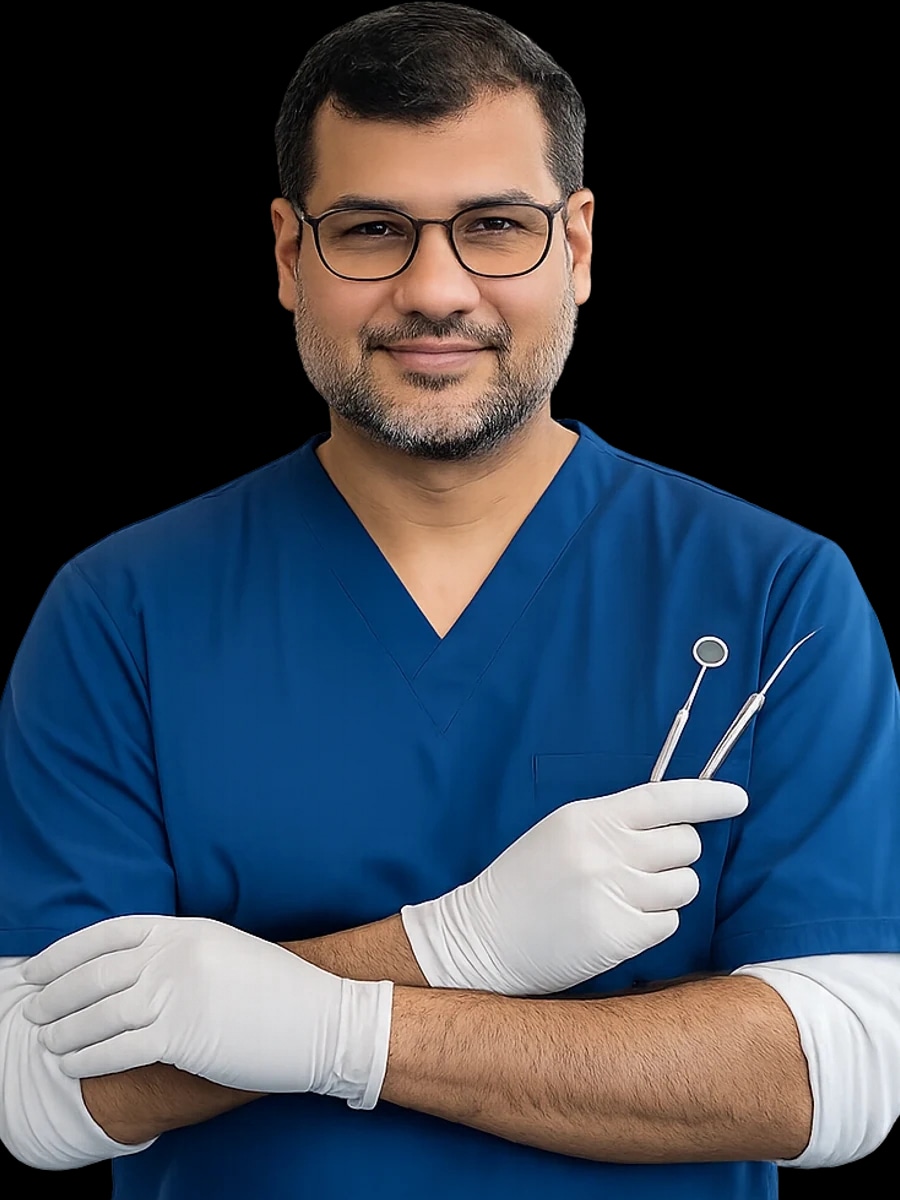
Dr. Saad Irfan
Senior Dental Surgeon, MDS Restorative Dentistry (Sheffield, UK). Dr. Saad has over 15 years of clinical experience in restorative and cosmetic dentistry. He trained at the University of Sheffield, UK, and practices at DHA Phase 5, DHA Phase 8, and Clifton Block 9 clinics in Karachi. He is committed to pain-free, evidence-based dental care.