
How Often Should You Visit the Dentist? (It's NOT Always 6 Months)
Medically reviewed byDr. Saad IrfanMDS, MSc, BDS·
Key Takeaways
- 1The twice-a-year rule originated from a 1950s toothpaste ad, not clinical research
- 2Your ideal visit frequency depends on your personal risk factors
- 3High-risk patients (smokers, diabetics, gum disease) should visit every 3-4 months
- 4Skipping checkups leads to expensive problems, a figure we confirm after examination filling vs a figure we confirm after examination root canal
- 5Professional scaling every 6 months prevents gum disease and keeps teeth healthy
"Visit your dentist twice a year." You've heard this your entire life, it's practically dental gospel. But where did this rule come from, and is it actually backed by science? The truth is more nuanced, and understanding it could save you both time and money, or alert you to why you need more frequent care.
The Origin of the Twice-a-Year Rule
The twice-yearly recommendation actually originated from a 1950s toothpaste advertisement by Pepsodent, not a clinical study. The slogan "See your dentist twice a year" was so effective that it became embedded in public consciousness and was eventually adopted as general advice by dental associations. While it remains a reasonable baseline for many patients, modern dentistry has shifted toward a personalized, risk-based approach.
A 2003 study in the British Dental Journal examined whether there was scientific evidence supporting the twice-yearly recommendation and found surprisingly little. The authors concluded that the optimal visit frequency should be based on individual risk assessment rather than a fixed schedule. This doesn't mean twice a year is wrong, for the average patient with moderate risk, it's perfectly appropriate. But some patients genuinely need more frequent visits, while others with excellent oral health can safely visit less often.
Risk Factors That Require More Frequent Visits
Your dentist should assess your personal risk profile and recommend a visit schedule that reflects your specific needs. High-risk patients benefit from quarterly visits (every 3 months), while low-risk patients with excellent oral health may safely visit once a year.
- History of gum disease (periodontitis), every 3–4 months to prevent recurrence
- Active smokers or tobacco users, every 3 months, as smoking dramatically increases gum disease risk
- Diabetes, heart disease, or immune system conditions that affect oral health
- High cavity risk due to diet, dry mouth, or genetic factors
- Pregnant women, hormonal changes significantly affect gum health
- Children and adolescents during growth phases, to monitor development
- Patients with existing dental work (crowns, implants, veneers), to maintain restorations
- People taking medications that cause dry mouth (antihistamines, antidepressants, blood pressure meds)
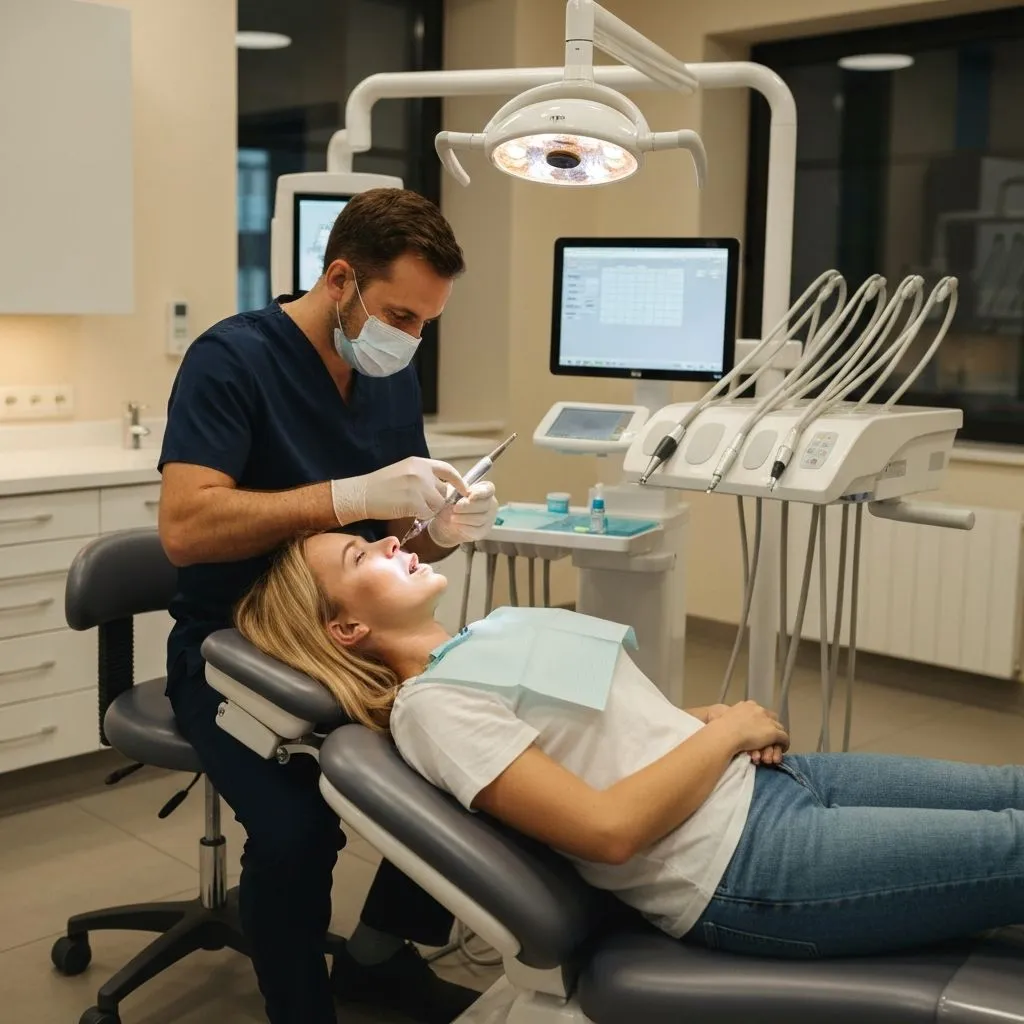
What Actually Happens at a Dental Visit
Most people underestimate how much happens in a standard checkup. Beyond the visual inspection, your dentist or hygienist performs several critical assessments that catch problems early, before they become painful or expensive.
- 1Professional scaling to remove hardened tartar (calculus) that brushing cannot touch
- 2Visual examination of all teeth, gums, tongue, and soft tissues
- 3Periodontal probing to measure gum pocket depths and detect early gum disease
- 4Digital X-rays (usually annually) to detect decay between teeth and below the gumline
- 5Oral cancer screening, examining for unusual lumps, discoloration, or sores
- 6Bite assessment to check for grinding, clenching, or TMJ issues
- 7Discussion of any concerns, symptoms, or changes since your last visit
The 6-Month Sweet Spot
Plaque that isn't removed becomes tartar (calculus) within 24–72 hours. Without professional cleaning, tartar accumulates to levels that cause gum inflammation within months. For average-risk patients, 6 months is the ideal window to prevent this buildup and catch problems early.
The Real Cost of Skipping Appointments
Skipping a routine checkup rarely causes immediate harm, but the cumulative effect is significant. Cavities caught at the cleaning stage require a simple filling (quoted after examination). Left for 18–24 months, the same cavity can progress to a root canal (quoted after examination) or extraction (a figure we confirm after examination plus implant at a price confirmed after examination). The cost difference is dramatic.
Consider this: a routine scaling appointment is quoted after examination. If you skip it and develop gum disease, treatment costs can climb substantially for deep cleaning (scaling and root planing), and advanced periodontitis may require surgery. Prevention is always less expensive, financially and physically, than treatment.
The World Health Organization emphasizes the importance of regular dental checkups for overall health.
Source: World Health Organization
Building Your Personal Dental Schedule
Start by having an honest conversation with your dentist about your risk factors, your home care routine, and your dental history. Together, you can set a schedule that genuinely reflects your needs, not a marketing slogan from 70 years ago. For most people, twice a year remains sound advice. For others, the right answer is something different, and finding that out is worth a conversation.
At our Karachi clinics, we offer professional dental assessments where Dr. Saad assesses your risk profile and recommends a personalized visit schedule at 2,000 PKR. Whether you need quarterly visits or annual checkups, we'll create a plan that keeps your teeth healthy without unnecessary appointments.
“The most expensive dental visit you'll ever have is the one you didn't make two years ago.”
Summary of This Article
The twice-a-year dental visit rule originated from a 1950s advertisement, not clinical research. Modern dentistry recommends personalized visit schedules based on risk factors. High-risk patients (smokers, diabetics, those with gum disease) should visit every 3-4 months, while low-risk patients may visit annually. Regular scaling (quoted after examination) every 6 months prevents expensive treatments like root canals (quoted after examination). Dr. Saad Irfan in DHA Karachi offers professional assessments (2,000 PKR) and personalized dental schedules.
Frequently Asked Questions
Ready to Transform Your Smile?
Book your professional assessment (2,000 PKR) with Dr. Saad Irfan. Open 7 days a week, 9AM-11PM at DHA Phase 5, DHA Phase 8, and Clifton Block 9 clinics in Karachi.
🔥 Popular Reads

Medical Disclaimer: This content is for informational purposes only and does not constitute medical advice. Always consult a qualified dentist for diagnosis and treatment specific to your condition. Results may vary depending on individual cases. Dr. Saad Irfan Dentistry, Karachi.
About the Author
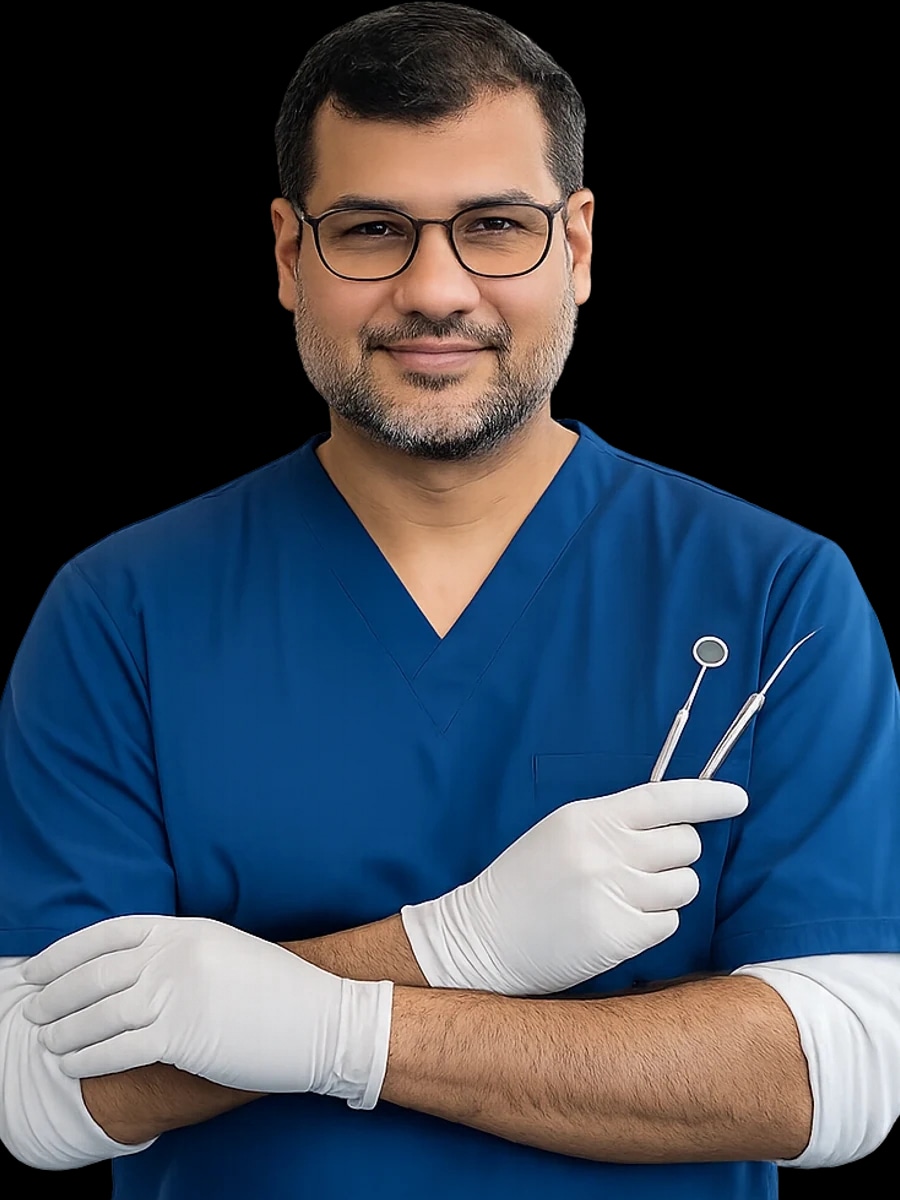
Dr. Saad Irfan
Senior Dental Surgeon, MDS Restorative Dentistry (Sheffield, UK). Dr. Saad has over 15 years of clinical experience in restorative and cosmetic dentistry. He trained at the University of Sheffield, UK, and practices at DHA Phase 5, DHA Phase 8, and Clifton Block 9 clinics in Karachi. He is committed to pain-free, evidence-based dental care.