NewNow in Vincy Mall, CliftonExplore
Dr. Saad Irfan Dentistry
Wisdom tooth removalOral surgery specialist · DHA

All four impactiontypes, removedby a specialist.

Wisdom tooth removal by oral surgery specialist Dr. Muhammad Ali Khuhawar at Dr. Saad Irfan's DHA clinic. Digital OPG X-ray on site, and all four impaction types treated, vertical, mesial, horizontal and distal. Open 9AM to 11PM, seven days.

Medically reviewed byDr. Saad Irfan·

OPG X-ray suite, photo pending

Impaction types

4

Assessment

PKR 2,000

Open

9AM–11PM

OPG X-ray

On site

Starting from a figure we confirm after examination, cost confirmed after OPG X-ray at your first visit

01

Overview

Wisdom teeth are the last four teeth to come through, one in each corner of the mouth, usually between the ages of 17 and 25. For some people, they erupt without any problem. For most, they do not. The human jaw has become shorter over evolutionary time, and most modern adults simply do not have enough space for a full set of 32 teeth. When a wisdom tooth has nowhere to go, it becomes impacted, stuck partially or fully within the jawbone or gum tissue, pressing against the tooth in front of it, trapping food and bacteria, and producing cycles of pain and infection that never fully resolve on their own. At Dr. Saad Irfan Dentistry in DHA Karachi, wisdom tooth removal is performed by Dr. Muhammad Ali Khuhawar, our oral surgery specialist, who handles all impaction types, from straightforward vertical impactions to complex horizontal impactions buried deep in bone.

Every wisdom tooth case at our clinic starts with a digital OPG (panoramic) X-ray, taken on site, reviewed immediately. The OPG maps the exact position, angle, and root shape of the wisdom tooth, and critically, shows its relationship to the inferior alveolar nerve, the nerve that runs through the lower jaw and supplies sensation to the lip and chin. Knowing this anatomy before surgery is not optional, it is the difference between a straightforward extraction and a nerve complication. Dr. Saad Irfan (MDS Restorative Dentistry, MSc Dental Materials, University of Sheffield, UK, PMDC registered, 15+ years clinical experience) oversees all treatment planning. All three clinics (DHA Phase 5, DHA Phase 8, and Clifton Block 9) are open 9AM to 11PM, 7 days a week including public holidays.

Wisdom Tooth Removal: At a Glance

Performed byDr. Muhammad Ali Khuhawar: Oral Surgery Specialist
ImagingDigital OPG X-ray taken and reviewed on site before surgery
AnesthesiaLocal anesthesia (Wand system): IV sedation available
Duration20 to 60 minutes depending on impaction complexity
SuturesResorbable, dissolve in 7 to 10 days, no removal visit needed
Recovery3 to 10 days depending on impaction type
Starting costFrom a figure we confirm after examination (varies by impaction complexity)
02

What Is an Impacted Wisdom Tooth and Why Does It Cause Problems?

A wisdom tooth, clinically called the third molar, is the last tooth in each quadrant of the mouth. Most people have four wisdom teeth, one per quadrant. They are the last to develop and the last to try to erupt into the mouth.

An impacted wisdom tooth is one that cannot erupt fully into its correct position because there is not enough space in the jaw. The tooth may be blocked by the second molar in front of it, by dense bone, or by the angle at which it is developing. Impacted wisdom teeth cause problems in four ways:

Recurrent infection (pericoronitis)

The gum flap covering a partially erupted wisdom tooth traps food and bacteria, causing repeated cycles of pain, swelling, and infection that antibiotics resolve temporarily but never permanently.

Decay on the adjacent second molar

The impacted wisdom tooth presses against the second molar root in an area that cannot be cleaned, causing a cavity that is invisible without X-ray and painless until advanced.

Cyst formation

The sac that surrounds the developing wisdom tooth (dental follicle) can fill with fluid and expand into a dentigerous cyst, slowly destroying surrounding bone. This is painless and detected only on X-ray.

Crowding and pressure

An erupting or semi-erupted wisdom tooth exerts forward pressure that can contribute to crowding of the front teeth, particularly in the lower jaw.

PLATE 01, wisdom tooth impaction scan

or browse files
PLATE 01DIGITAL OPG DIAGNOSTIC · DHA PHASE 5
03

The 4 Types of Wisdom Tooth Impaction: What Your OPG Tells Us

4 classifications

Every impacted wisdom tooth sits at a specific angle inside the jaw. The angle determines the surgical approach, the difficulty, the recovery time, and the risk profile. Here are the four classifications.

Low to moderateRecovery: 3 to 5 days

Vertical Impaction

The tooth is pointing straight up, the correct orientation, but cannot break through the gum fully because there is not enough room between the second molar and the back wall of the jaw. The crown may be partially visible through the gum. This is often the simplest impaction to remove, a gum flap is raised, minimal or no bone is removed, and the tooth is elevated out of the socket. Sutures are placed and dissolve within a week.

Moderate, most commonRecovery: 5 to 7 days

Mesial (Angular) Impaction

The tooth is angled forward, pushing into the root of the second molar. This is the most frequently seen impaction, and the one most likely to cause decay on the adjacent molar if left in place. Removal requires raising a flap, removing bone from above and behind the tooth, and sectioning the tooth into two or three pieces so each section can be removed individually without excessive force on the adjacent tooth or the surrounding bone.

High, most complexRecovery: 7 to 10 days

Horizontal Impaction

The tooth is lying completely on its side, the crown pressing directly into the root of the second molar, the roots extending toward or near the inferior alveolar nerve canal. This is the most surgically demanding impaction type. The tooth must almost always be sectioned into multiple pieces. Bone must be carefully reduced on multiple sides. The proximity to the inferior alveolar nerve requires precise technique to avoid nerve injury. CBCT 3D scan is recommended for horizontal impactions to map the exact nerve position in three dimensions.

Variable, least commonRecovery: 5 to 8 days

Distal Impaction

The tooth is angled backward, away from the second molar, toward the back wall of the jaw (the ramus of the mandible). This type is rarer. Surgical difficulty depends on how deeply the tooth is embedded in bone and whether the roots are hooked or divergent. Because the tooth points away from the adjacent molar, the risk of damage to the second molar is lower, but access for the surgeon is tighter due to the position against the ramus.

The OPG X-ray taken at your first visit classifies the impaction type immediately. Dr. Khuhawar reviews the image with you, explains what he sees, and tells you what the surgery will involve, before anything is done.

04

Pericoronitis: Why Your Wisdom Tooth Keeps Getting Infected

If your wisdom tooth has been hurting on and off for months, a week of pain, then it settles, then a month later the pain returns, you are almost certainly experiencing the pericoronitis cycle. Understanding this cycle explains why the problem never resolves on its own and why antibiotics only buy time.

01

Food Traps Under the Gum Flap

A partially erupted wisdom tooth has a flap of gum tissue (operculum) covering part of the crown. Food particles, rice, bread, meat fibres, slide under this flap during chewing. The area is impossible to clean properly with a toothbrush. Bacteria colonise the trapped debris.

02

Infection Develops: Pain, Swelling, Bad Taste

Bacterial infection inflames the gum tissue around the tooth. The area becomes swollen, red, and painful to touch. Pus may form under the flap, producing a persistent bad taste. Pain radiates to the ear, temple, and throat on the same side. Opening the mouth fully becomes difficult, trismus (restricted jaw opening) is a hallmark sign of pericoronitis.

03

Antibiotics Reduce Symptoms: Temporarily

A course of antibiotics (typically amoxicillin and metronidazole) reduces the bacterial load. Swelling settles. Pain resolves. The patient feels better and believes the problem is gone. But the anatomy has not changed, the gum flap is still there, the tooth is still partially erupted, and the food trap still exists.

04

Weeks or Months Later: Infection Returns

Food traps under the flap again. Bacteria repopulate. The entire cycle repeats. Each episode can be slightly worse than the last as the tissue becomes more scarred and the pocket deepens. Some patients go through this cycle 3 to 5 times before deciding to have the tooth removed, by which time the adjacent second molar may have already developed decay from prolonged bacterial exposure.

The only permanent solution for recurrent pericoronitis is removing the wisdom tooth. This eliminates the gum flap, the food trap, and the bacterial reservoir. No amount of antibiotics, mouthwash, or careful brushing resolves the underlying anatomical problem.

05

Should You Remove a Wisdom Tooth That Is Not Causing Pain?

This is one of the most common questions patients ask, and the answer is not always the same for every patient. Here is the clinical reasoning.

Yes: Remove It If:

  • The OPG shows it is impacted at an angle that will never allow eruption, the tooth is stuck and will remain stuck.
  • It is pressing against the second molar root, decay forming on the adjacent tooth is visible on X-ray or likely to develop.
  • A dentigerous cyst is forming around the unerupted tooth, visible as a dark halo on OPG.
  • You are between 17 and 25, roots are not fully formed and bone is less dense, making extraction significantly easier and recovery faster.
  • You are about to start orthodontic treatment (braces), wisdom teeth can undo orthodontic correction by pushing teeth forward.
  • You have had even one episode of pericoronitis, it will recur.

No: Leave It If:

  • The tooth has fully erupted in the correct position and you can clean it properly, not all wisdom teeth are problematic.
  • The OPG shows no impaction, no cyst, no pressure on adjacent teeth, a rare but possible finding.
  • You are over 35 and the tooth has been asymptomatic for years with no X-ray findings, the risk-benefit ratio of extraction may not justify surgery at this stage.

The decision is not about fear or convenience. It is about what the X-ray shows. At your consultation, Dr. Khuhawar reviews the OPG with you, shows you the impaction angle and its relationship to the adjacent tooth and nerve, and makes a clinical recommendation. If the recommendation is to leave it, we tell you that directly. We do not extract teeth that do not need extracting.

06

The Nerve Question: “Will I Lose Feeling in My Lip?”

This is the fear that stops more patients from having their wisdom teeth removed than any other, and no dental website in Karachi addresses it directly. Here is the honest clinical answer.

The inferior alveolar nerve (IAN) runs through a canal inside the lower jawbone, directly beneath the roots of the lower wisdom teeth. This nerve supplies sensation to the lower lip, chin, and gums on that side. If a wisdom tooth root is very close to or touching this nerve canal, visible on OPG as the root overlapping the canal line, there is a small risk that surgery could bruise or stretch the nerve, causing temporary numbness or altered sensation in the lip and chin.

The Numbers: Based on Published Clinical Data

2 to 8%

Temporary nerve disturbance

of lower wisdom tooth surgeries where the root is close to the nerve. Sensation returns fully in the vast majority of cases within 6 to 12 weeks.

Less than 1%

Permanent nerve damage

of cases, and most of these are partial altered sensation, not complete numbness.

Near zero risk

For wisdom teeth not close to the nerve

At Dr. Saad's clinic, every lower wisdom tooth extraction is preceded by a detailed OPG review. If the root tips appear to be intimately related to the nerve canal, a CBCT (3D cone beam CT scan) is recommended, this shows the exact three-dimensional relationship between root and nerve. Armed with this information, Dr. Khuhawar plans the surgical approach to minimise nerve proximity during extraction.

The lingual nerve, which supplies sensation to the tongue, is also in the surgical field. The same precautions apply. Lingual nerve injury is less common than IAN injury but follows the same recovery pattern.

07

Recovery After Wisdom Tooth Removal: What to Expect by Impaction Type

Recovery is not the same for every wisdom tooth. A straightforward vertical impaction heals differently from a deep horizontal impaction. Here is what to realistically expect.

MilestoneVertical / SimpleMesial / ModerateHorizontal / Complex
Surgery duration20 to 30 min30 to 45 min45 to 60 min
Swelling peakDay 1 to 2Day 2 to 3Day 2 to 4
Pain manageable with OTC painkillersDay 1 to 2Day 2 to 4Day 3 to 7
Soft foods only2 to 3 days4 to 5 days5 to 7 days
Return to work / schoolNext day or Day 2Day 3 to 4Day 5 to 7
Sutures dissolve7 to 10 days7 to 10 days10 to 14 days
Full comfort restored5 to 7 days7 to 14 days14 to 21 days
Socket fully closed3 to 4 weeks4 to 6 weeks6 to 8 weeks
Dry socket risk windowDay 2 to 4Day 2 to 5Day 2 to 7

Dry socket risk is highest for lower wisdom teeth. Up to 38% of lower wisdom tooth extractions can develop dry socket, the most common complication. The full dry socket prevention protocol is covered on our tooth extraction page. Key rules: no smoking for 72 hours minimum, no straws, no vigorous rinsing in the first 24 hours, no spitting.

08

The Best Age to Have Wisdom Teeth Removed: And Why Waiting Costs More

The clinical evidence is clear: wisdom tooth removal between ages 17 and 25 is easier, heals faster, and carries lower complication risk than removal later in life. Three reasons:

01

Roots Are Not Fully Formed Yet

At age 18 to 20, wisdom tooth roots are typically two-thirds developed. Shorter roots mean less bone needs to be removed, the tooth comes out more easily, and the root tips are further from the nerve canal. By age 30, roots are fully formed, sometimes curved or hooked, and may be intimately wrapped around the nerve, making surgery harder and nerve risk higher.

02

Bone Is Less Dense in Younger Patients

The jawbone of an 18-year-old is slightly less mineralised than that of a 35-year-old. This means the bone gives more easily during extraction, less force is needed, less bone is removed, and the socket heals faster. In older patients, the bone is denser and more brittle, requiring more surgical effort and longer recovery.

03

Healing Is Faster in Younger Patients

Younger patients have better blood supply to the surgical site, faster cell turnover, and more predictable bone regeneration. A 20-year-old recovering from wisdom tooth surgery typically returns to full comfort within a week. A 40-year-old may take 2 to 3 weeks for the same impaction type.

We recommend an OPG X-ray at age 17 to 18 to assess whether the wisdom teeth will need removal. If impaction is confirmed, planning removal while the patient is still in their late teens or early twenties gives the best possible outcome. This is not about rushing into surgery, it is about operating when the clinical conditions are most favourable.

Patient Reviews

519 verified reviews at 5.0 stars across our three clinics, including surgical extractions performed by our oral surgery specialist. They live on Google, where they are verified and we cannot edit them.

09

Frequently Asked Questions

10

Why Wisdom Tooth Surgery Requires a Specialist: Not Just a Dentist

A wisdom tooth extraction is not a routine filling or a simple cleaning. It is a surgical procedure. It involves making incisions in gum tissue, removing bone from around a tooth, sectioning a tooth with a surgical bur, and working millimetres away from a major sensory nerve. The difference between a comfortable 30-minute surgery with a 5-day recovery and a difficult 90-minute surgery with a 3-week recovery is almost entirely down to two things: pre-surgical imaging and surgical experience. At Dr. Saad's clinics, wisdom tooth cases are handled by Dr. Muhammad Ali Khuhawar, whose clinical focus is oral surgery. He reviews every OPG before surgery, plans the sectioning approach based on root anatomy, and operates with the precision that comes from performing this procedure hundreds of times.

If you have been putting off your wisdom tooth removal because you are afraid of the nerve, afraid of the pain, or unsure whether it actually needs to come out, start with the OPG. The X-ray takes 30 seconds. It answers every question. And it costs you nothing in anxiety, because once you see the image and hear the explanation, the unknown becomes known, and the decision becomes clinical rather than emotional. Book at our DHA Phase 5 or DHA Phase 8 clinic. We are open 9AM to 11PM, every day.

Dr. Saad Irfan, BDS, MDS (Restorative Dentistry), MSc Dental Materials: University of Sheffield, UK. PMDC Registered. Principal Dentist, Dr. Saad Irfan Dentistry, DHA Karachi.

13

Where it is done

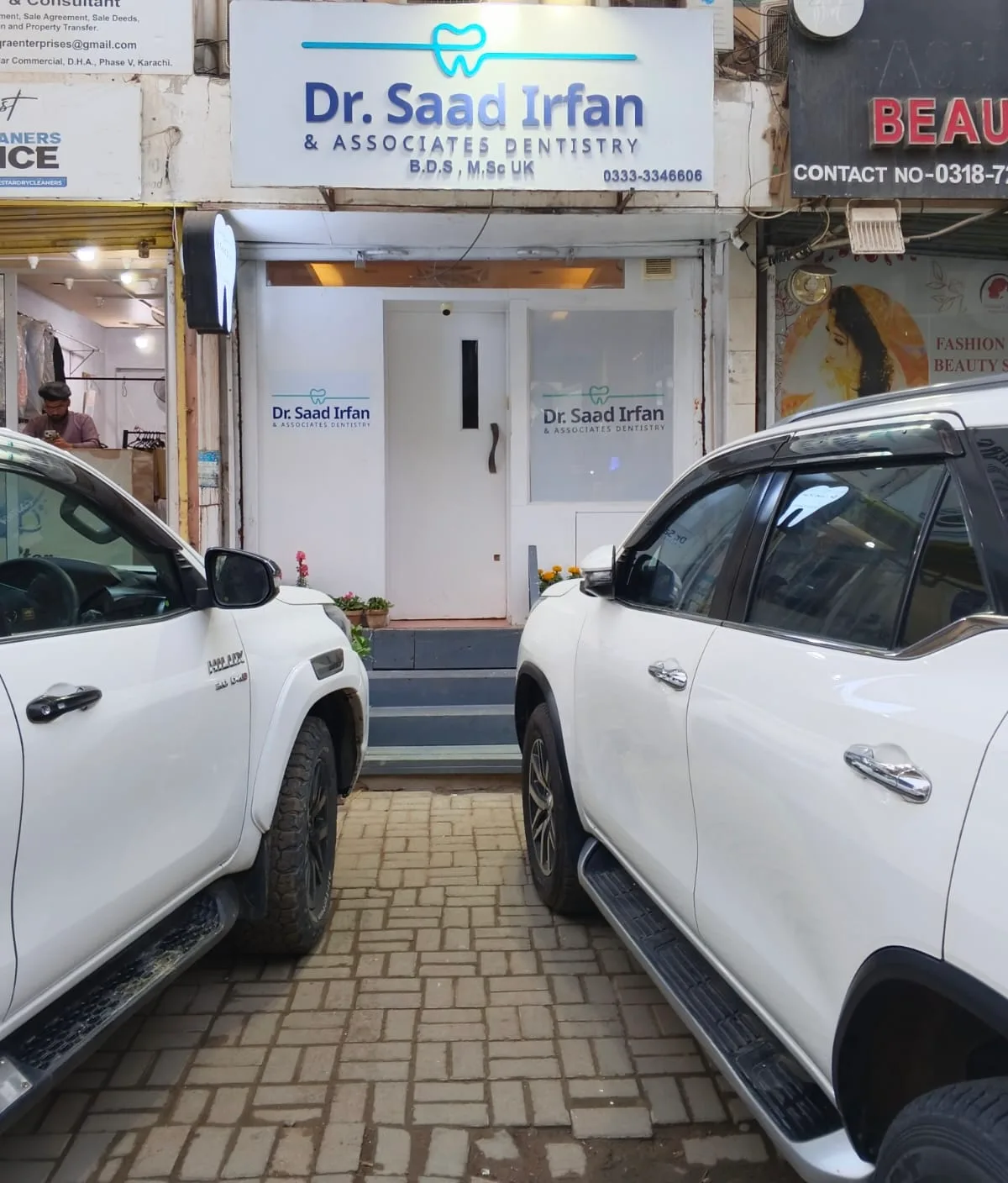
Dr Saad Irfan & Associates Dentistry clinic exterior, DHA Phase 5, Karachi
Wisdom tooth removal at DHA Phase 5

Plot 4-C, Shop 2, 5 Badar Commercial Street 2, Badar Commercial Area, Phase 5, DHA

+92 313 3466661 · Open 9AM-11PM, 7 days a week · 5.0★ (279 reviews)

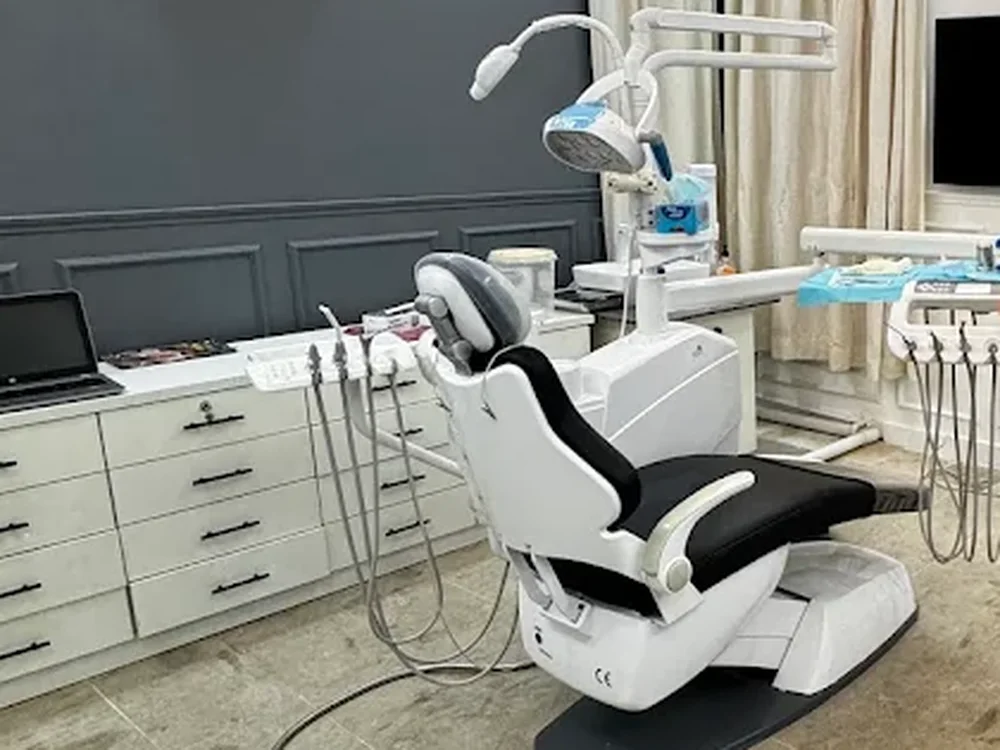
Treatment room at Dr Saad Irfan & Associates Dentistry, DHA Phase 8, Karachi
Wisdom tooth removal at DHA Phase 8

H#202/2, 21 Street Khayaban-e-Iqbal, DHA Phase 8 Zone A

+92 313 3466661 · Open 9AM-11PM, 7 days a week · 5.0★ (86 reviews)

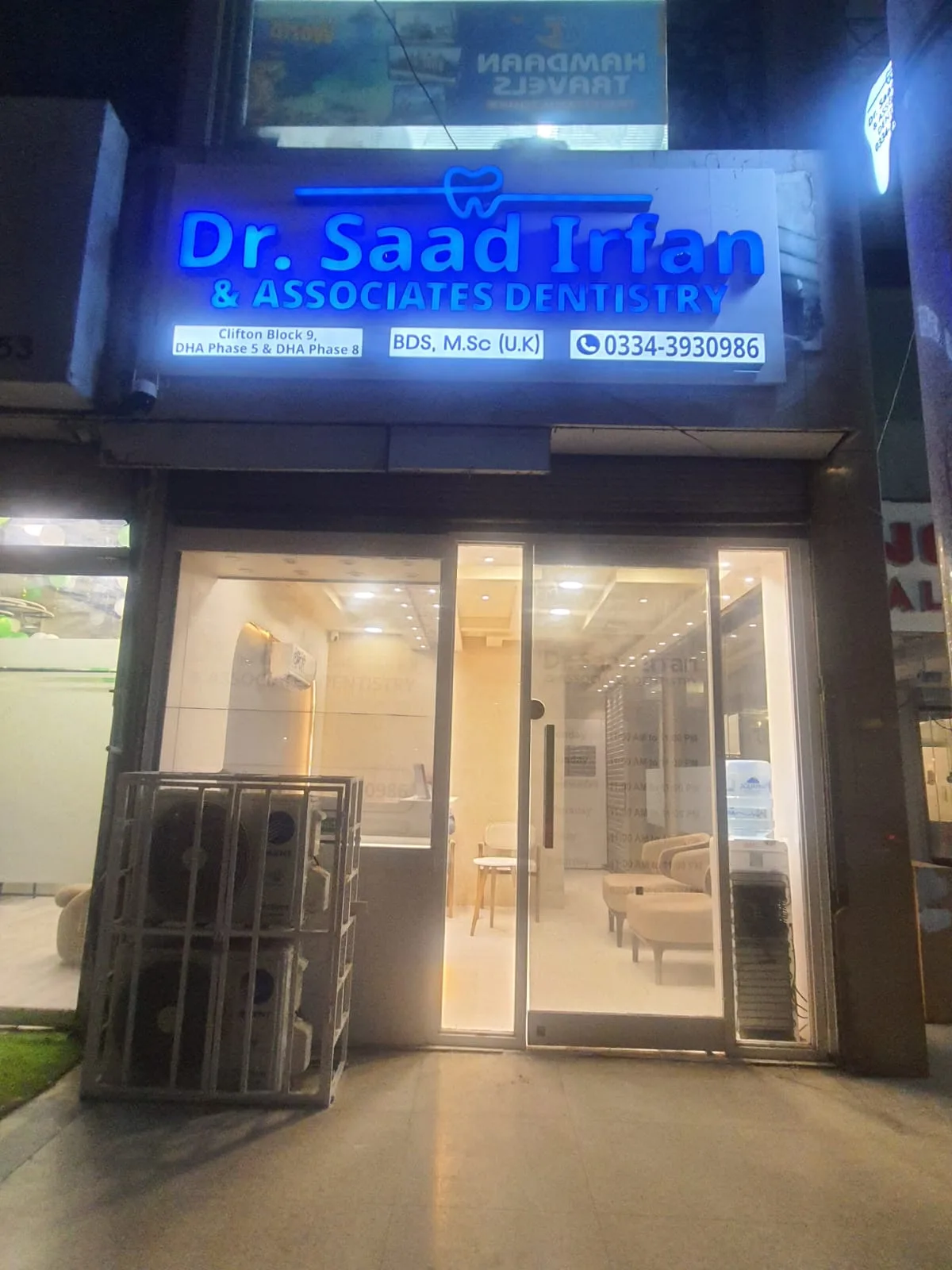
Dr Saad Irfan & Associates Dentistry clinic exterior, Clifton Block 9, Karachi
Wisdom tooth removal at Clifton Block 9

Shop No. 6, Ground Floor, Vincy Mall, Block 9, Clifton

+92 334 3930986 · Open 9AM-11PM, 7 days a week · 5.0★ (154 reviews)

Book Your Wisdom Tooth Consultation in DHA Karachi

Step one is the OPG X-ray. Taken on site, reviewed immediately. You leave the first appointment knowing exactly what your wisdom teeth are doing, whether they need to come out, and what the surgery will involve.

Open 9AM to 11PM, 7 days including public holidays. DHA Phase 5 (Badar Commercial), DHA Phase 8 (Khayaban-e-Iqbal), and Clifton Block 9 (Vincy Mall).