
Dental Veneers Guide 2026: Cost, Types & Are They Worth It?
Medically reviewed byDr. Saad IrfanMDS, MSc, BDS·
Key Takeaways
- 1Veneers are ultra-thin shells (0.3-0.5mm) that bond to the front of teeth to fix chips, gaps, stains, and misalignment
- 2Porcelain veneers last 10-20 years while composite veneers last 5-7 years
- 3The procedure involves minimal enamel removal and is mostly irreversible
- 4Cost in Karachi ranges quoted after examination (composite) to a figure we quote after examination (porcelain) per tooth
- 5Proper care includes avoiding hard foods, wearing a night guard if you grind teeth, and regular checkups
If you've ever looked at a celebrity's smile and wondered how their teeth look so impossibly perfect, there's a good chance dental veneers were involved. But veneers aren't just for the rich and famous, they've become one of the most accessible and transformative cosmetic dental treatments available today. In this comprehensive guide, we'll cover everything from types and costs to the procedure itself, so you can make an informed decision about whether veneers are right for you.
What Exactly Are Dental Veneers?
Dental veneers are custom-made, ultra-thin shells, typically 0.3 to 0.5 millimeters thick, that are bonded to the front surface of your teeth. Think of them as a tailored cover for your teeth, permanently attached to give you a new smile. They can change the color, shape, size, length, and even apparent alignment of your teeth, making them one of the most versatile cosmetic dental treatments available.
Veneers were first invented in 1928 by a California dentist named Charles Pincus, who created temporary acrylic shells for Hollywood actors. These early veneers were held in place with denture adhesive and lasted only through a single filming session. The permanent bonding technique we use today was developed in 1959 by Dr. Michael Buonocore, who discovered that etching tooth enamel with acid created a surface that bonded strongly with dental materials. This breakthrough transformed veneers from a temporary movie prop into a lasting dental restoration.
Today, veneers are one of the most popular cosmetic dental procedures worldwide, with the American Academy of Cosmetic Dentistry reporting that veneer placements have increased by over 250% in the last two decades. They address a wide range of cosmetic concerns including permanently stained teeth that don't respond to whitening, chips and cracks, gaps between teeth, slightly crooked teeth, and uneven or worn teeth.
Porcelain vs. Composite Resin: What's the Difference?
Not all veneers are created equal. Your dentist will help you choose the right material based on your goals, your budget, and the current condition of your teeth. The two main types, porcelain and composite resin, have distinct advantages and limitations that are important to understand before making your decision.
- Porcelain veneers: More durable (10–20 years), highly stain-resistant, require some enamel removal, more expensive (a figure we confirm after examination per tooth in Karachi)
- Composite resin veneers: Completed in one visit, less enamel removed, more affordable (a figure we confirm after examination per tooth), last 5–7 years
- Ultra-thin/no-prep veneers (Lumineers): Minimal to no enamel removal, ideal for certain cases, slightly less natural-looking in some situations
- Temporary veneers: Used during the fabrication process of permanent porcelain veneers to protect prepared teeth
Porcelain veneers are generally considered the gold standard because of their superior durability, natural light-reflecting properties (porcelain mimics the translucency of natural enamel), and stain resistance. Composite veneers are an excellent budget-friendly option and can be repaired easily if chipped, but they don't last as long and are more prone to staining from coffee, tea, and tobacco.
Choosing Between Porcelain and Composite
If budget is your primary concern, composite veneers provide excellent results at a lower cost. If longevity and natural appearance are priorities, porcelain is worth the investment. Many patients start with composite to 'test-drive' their new smile before upgrading to porcelain later.
The Veneer Process: Step by Step
Getting veneers is a multi-step process that requires careful planning and precision. Understanding each step helps you prepare mentally and ensures the best possible outcome.
- 1Consultation: Your dentist evaluates your teeth, discusses your goals, takes photographs, and determines if veneers are appropriate for you. This is also where you'll discuss shade selection, choosing a color that complements your skin tone
- 2Preparation: A thin layer of enamel (0.3-0.5mm) is removed from the front of the tooth to make room for the veneer. This is done under local anesthesia so you feel no discomfort. Impressions or digital scans are taken
- 3Temporaries: Temporary veneers are placed to protect the prepared teeth while your permanent veneers are being crafted in a dental laboratory. This process typically takes 1-2 weeks
- 4Try-in: When your permanent veneers arrive, your dentist temporarily places them to check fit, shape, and color. You'll have the opportunity to see them in a mirror and request any adjustments
- 5Bonding: The permanent veneers are cleaned, your teeth are etched with acid to create a bonding surface, and dental cement is applied. A special light hardens the cement in seconds
- 6Final adjustments: Minor polishing and bite adjustments ensure your veneers feel completely natural. A follow-up visit is usually scheduled 1-2 weeks later
The entire process for porcelain veneers takes 2-3 visits over 2-3 weeks. Composite veneers can often be completed in a single visit of 2-3 hours, as the material is applied and sculpted directly on your teeth.
Important Consideration
Veneers are considered an irreversible procedure because enamel removal is permanent. Once enamel is removed, your teeth will always need some form of covering. It's essential to be fully committed before proceeding and to consult with an experienced cosmetic dentist.
How Long Do Veneers Last?
With proper care, porcelain veneers typically last 10–20 years. A long-term study published in the Journal of Dentistry found that 95% of porcelain veneers were still functioning well after 10 years, and 83% lasted 20 years. Composite veneers generally last 5–7 years before needing replacement or repair.
The biggest factors affecting veneer longevity are oral hygiene habits, diet, and whether you grind your teeth (bruxism). Patients who grind their teeth at night and don't wear a night guard will see significantly reduced veneer lifespan. Similarly, habits like biting nails, chewing ice, or using teeth as tools can chip or crack veneers.
Caring for Your Veneers
- Brush twice daily with non-abrasive toothpaste, abrasive formulas can scratch porcelain over time
- Floss daily, veneers don't protect the gum line, and gum disease can undermine veneer longevity
- Avoid biting hard objects (nails, ice, pen caps, bottle caps)
- Wear a custom night guard if you grind your teeth, this is the single most important protective measure
- Limit staining beverages like coffee, tea, and red wine (especially important for composite veneers)
- Schedule regular checkups and professional cleanings every 6 months
- Don't use your teeth to open packages or tear tape
The Journal of Dentistry published a 20-year follow-up study on porcelain veneer survival rates.
Source: Journal of Dental Research
Are Veneers Right for You?
Veneers work best for people with healthy gums and enough enamel to support the bonding process. They're ideal for chipped, cracked, or worn teeth, permanent stains that don't respond to whitening, gaps between teeth, or mildly crooked teeth. If your issues are more structural, severe bite problems, significantly misaligned teeth, or extensive decay, other treatments like orthodontics or crowns may be more appropriate.
At our Karachi clinics, Dr. Saad evaluates every veneer candidate thoroughly before recommending treatment. A professional assessment (2,000 PKR) includes photographs, digital smile design, and a discussion of your goals. We'll honestly tell you if veneers are the best option or if an alternative treatment would serve you better.
“The best veneer result is one that looks so natural, people just think you have great teeth. That's the art of cosmetic dentistry.”
Summary of This Article
Dental veneers are thin porcelain or composite shells bonded to teeth to fix cosmetic issues like chips, gaps, stains, and minor misalignment. Porcelain veneers last 10-20 years and is quoted per tooth after examination in Karachi, while composite veneers last 5-7 years at a price confirmed after examination per tooth. The procedure requires minimal enamel removal (0.3-0.5mm) and typically takes 2-3 visits for porcelain or 1 visit for composite. Dr. Saad Irfan at his Karachi clinics offers both types with digital smile design preview.
Frequently Asked Questions
Ready to Transform Your Smile?
Book your professional assessment (2,000 PKR) with Dr. Saad Irfan. Open 7 days a week, 9AM-11PM at DHA Phase 5, DHA Phase 8, and Clifton Block 9 clinics in Karachi.
🔥 Popular Reads

Medical Disclaimer: This content is for informational purposes only and does not constitute medical advice. Always consult a qualified dentist for diagnosis and treatment specific to your condition. Results may vary depending on individual cases. Dr. Saad Irfan Dentistry, Karachi.
About the Author
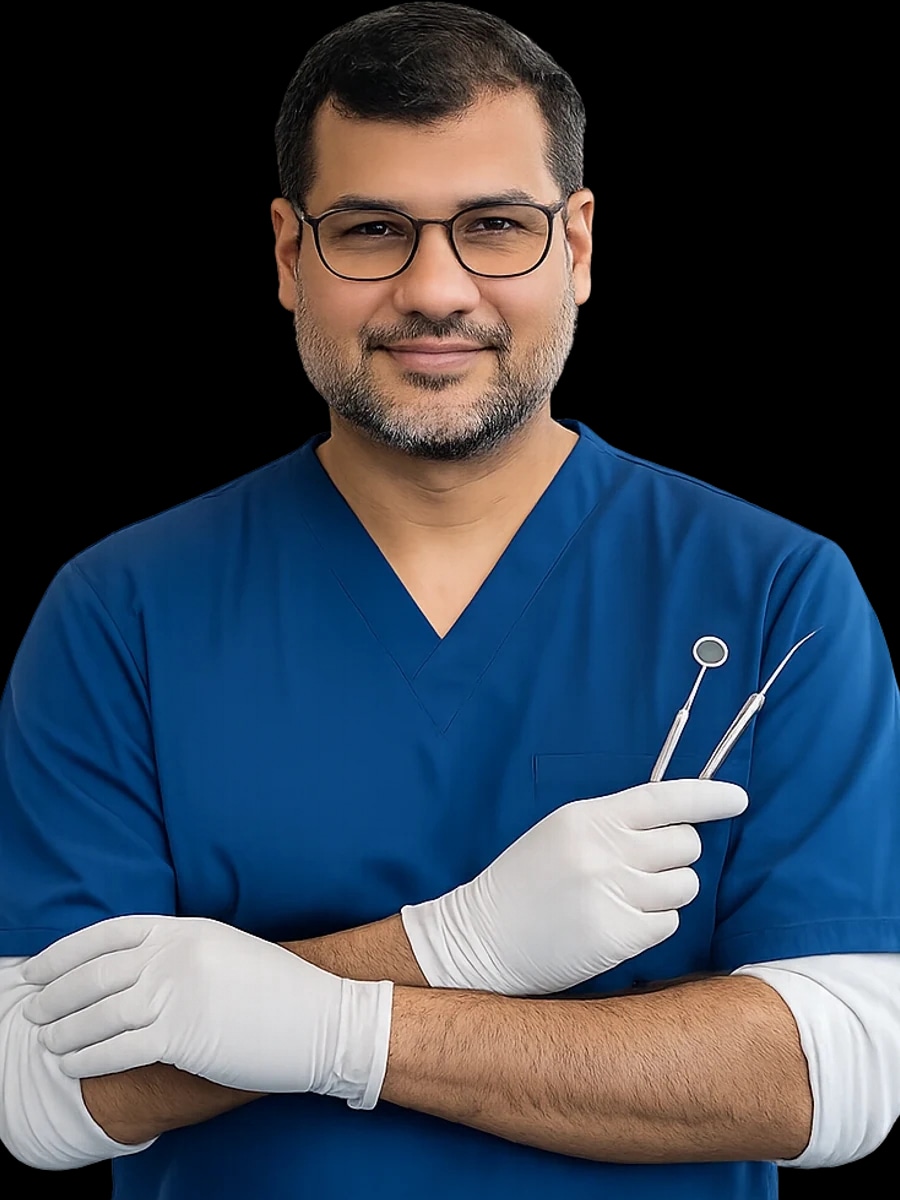
Dr. Saad Irfan
Senior Dental Surgeon, MDS Restorative Dentistry (Sheffield, UK). Dr. Saad has over 15 years of clinical experience in restorative and cosmetic dentistry. He trained at the University of Sheffield, UK, and practices at DHA Phase 5, DHA Phase 8, and Clifton Block 9 clinics in Karachi. He is committed to pain-free, evidence-based dental care.