
A structured8-point oralexamination.
Most people in Karachi visit a dentist when something hurts, by which point the problem has usually been growing for months. A checkup here is not a quick glance in your mouth: it is a structured 8-point assessment combining clinical examination, imaging where indicated, periodontal measurements and soft-tissue screening, so problems are found before they become expensive.
Medically reviewed byDr. Saad IrfanMDS, MSc, BDS·
Appointment
30–45 min
Assessment
PKR 2,000
Open
9AM–11PM
Exam points
8
PLATE 01, 8-point oral examination
or browse filesA complete oral examination, not just a quick look
A dental checkup reviews your whole mouth rather than only the tooth that is bothering you. Each part of the appointment detects a different category of disease, which is why a proper exam is more than a quick visual check.
Dr. Saad Irfan holds an MDS in Restorative Dentistry and an MSc in Dental Materials from the University of Sheffield, UK. That postgraduate training focuses on early-stage detection, restoration failure, periodontal change, and bite-related damage before a patient notices pain.
At a glance
Duration
30 to 45 minutes for a new patient, 20 to 30 minutes for an existing patient
X-rays
Digital periapical X-rays and OPG when clinically indicated
Pain
None. A checkup is non-invasive.
You leave with
A written treatment plan listing findings, priority order, and cost estimates
Recommended frequency
Every 6 months for most adults
What happens during your checkup
Here is what Dr. Saad assesses during a comprehensive dental checkup and why each step matters clinically.
Medical and dental history review
Every checkup starts with medications, allergies, recent illness, and dental concerns. This changes treatment safety and planning.
Digital X-ray assessment
Periapical X-rays and OPG reveal hidden decay, root-tip infection, bone levels, wisdom tooth issues, and failure beneath restorations.
Cavity detection across all tooth surfaces
Each tooth is checked across all five surfaces so early enamel decay and higher-risk areas are found before they become painful.
Periodontal assessment with BPE scoring
Gum pocket depth is measured around teeth to detect early or advanced periodontitis, which is often painless before bone loss begins.
Existing restorations check
Fillings, crowns, bridges, veneers, and implants are checked for secondary decay, marginal failure, and structural wear.
Occlusal and bite assessment
The bite is checked for bruxism, overload, wear, fracture risk, and TMJ symptoms that can silently damage teeth over time.
Oral cancer screening
The lips, cheeks, tongue, floor of mouth, palate, and throat are examined for ulcers, white patches, red patches, and abnormal tissue changes.
Written treatment plan and hygiene instruction
Every checkup ends with clear findings, priority order, cost guidance, and home-care advice tailored to the mouth being examined.
The clinical reason behind the 6-month recall
The 6-month interval is about disease progression, not habit. It gives us a realistic window to find change before treatment becomes more invasive.
Plaque becomes calculus quickly
Plaque can harden into calculus within 48 to 72 hours, and brushing cannot remove it once it hardens.
Cavities can progress within months
An early enamel cavity can move into dentine within 6 to 12 months, turning a simple filling case into a more complex one.
Gum disease is easier to control early
Periodontitis is managed by stopping progression before significant bone loss occurs, which is why recall timing matters.
Soft tissue changes need monitoring
Pre-cancerous oral lesions can develop and change within months, so consistent comparison between visits matters.
Problems a checkup finds before pain starts
The most dangerous dental problems are often painless at the stage where they are easiest to treat.
Interproximal decay
Decay between teeth is commonly invisible and painless until it is much deeper.
Periapical abscess
A tooth can have infection at the root tip without obvious pain until much later.
Early periodontitis
Bone loss from gum disease is usually painless in the early stages.
Failing restorations
A crown or filling may appear stable while secondary decay develops underneath.
Wisdom tooth damage
An impacted wisdom tooth can damage the molar in front of it without symptoms.
Pre-cancerous oral lesions
White patches, red patches, and persistent ulcers may not be painful but can still be significant.
A thorough checkup catches what you do not know is there
"I came in thinking everything was fine. Dr. Saad found a cavity between two teeth, some early gum pocket depth, and a wisdom tooth pressing against the molar behind it. None of them were causing pain. He explained everything clearly and I left with a written plan."
Aisha M. - DHA Phase 5, Karachi. Routine Dental Checkup.
Read verified Google reviewsFrequently asked questions
What a specialist sees that a general examination may miss
A specialist examination is not about looking longer. It is about pattern recognition built through postgraduate training. Dr. Saad's restorative training focuses on caries progression, restoration margins, periodontal change, occlusal wear, and how these patterns evolve over time.
At all three Karachi clinics, each checkup creates a written and digital record. Pocket depths, X-rays, restorations, and soft tissue findings can be compared against previous visits. That is how a 6-month recall helps prevent tooth loss: by measuring change before it becomes irreversible.
Dr. Saad Irfan, BDS, MDS (Restorative Dentistry), MSc Dental Materials - University of Sheffield, UK. PMDC Registered. Principal Dentist, Dr. Saad Irfan Dentistry, DHA Karachi.
Where it is done
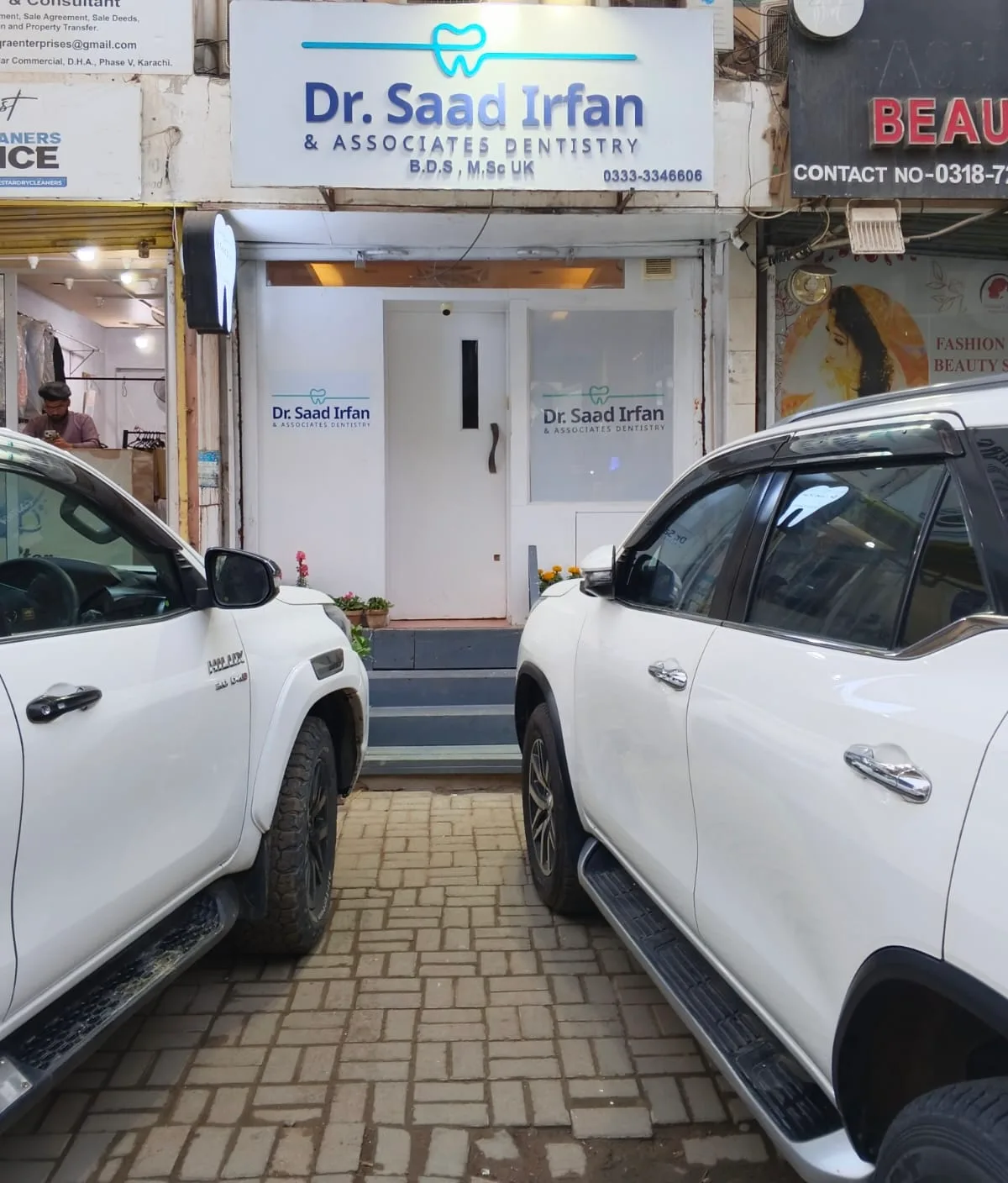
Plot 4-C, Shop 2, 5 Badar Commercial Street 2, Badar Commercial Area, Phase 5, DHA
+92 313 3466661 · Open 9AM-11PM, 7 days a week · 5.0★ (279 reviews)
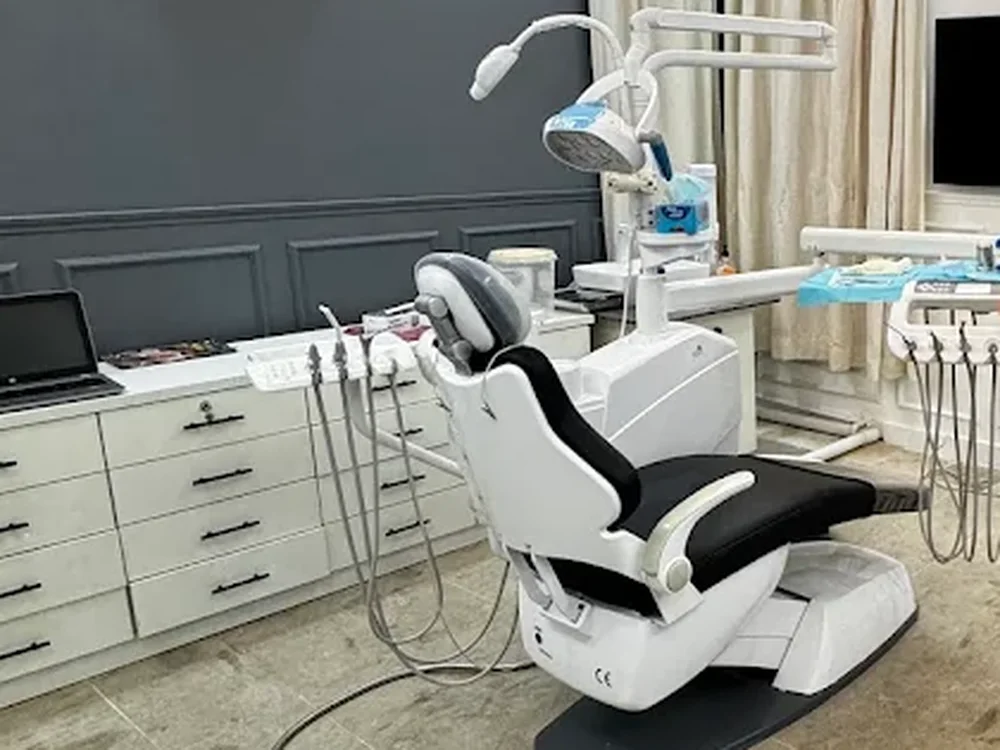
H#202/2, 21 Street Khayaban-e-Iqbal, DHA Phase 8 Zone A
+92 313 3466661 · Open 9AM-11PM, 7 days a week · 5.0★ (86 reviews)
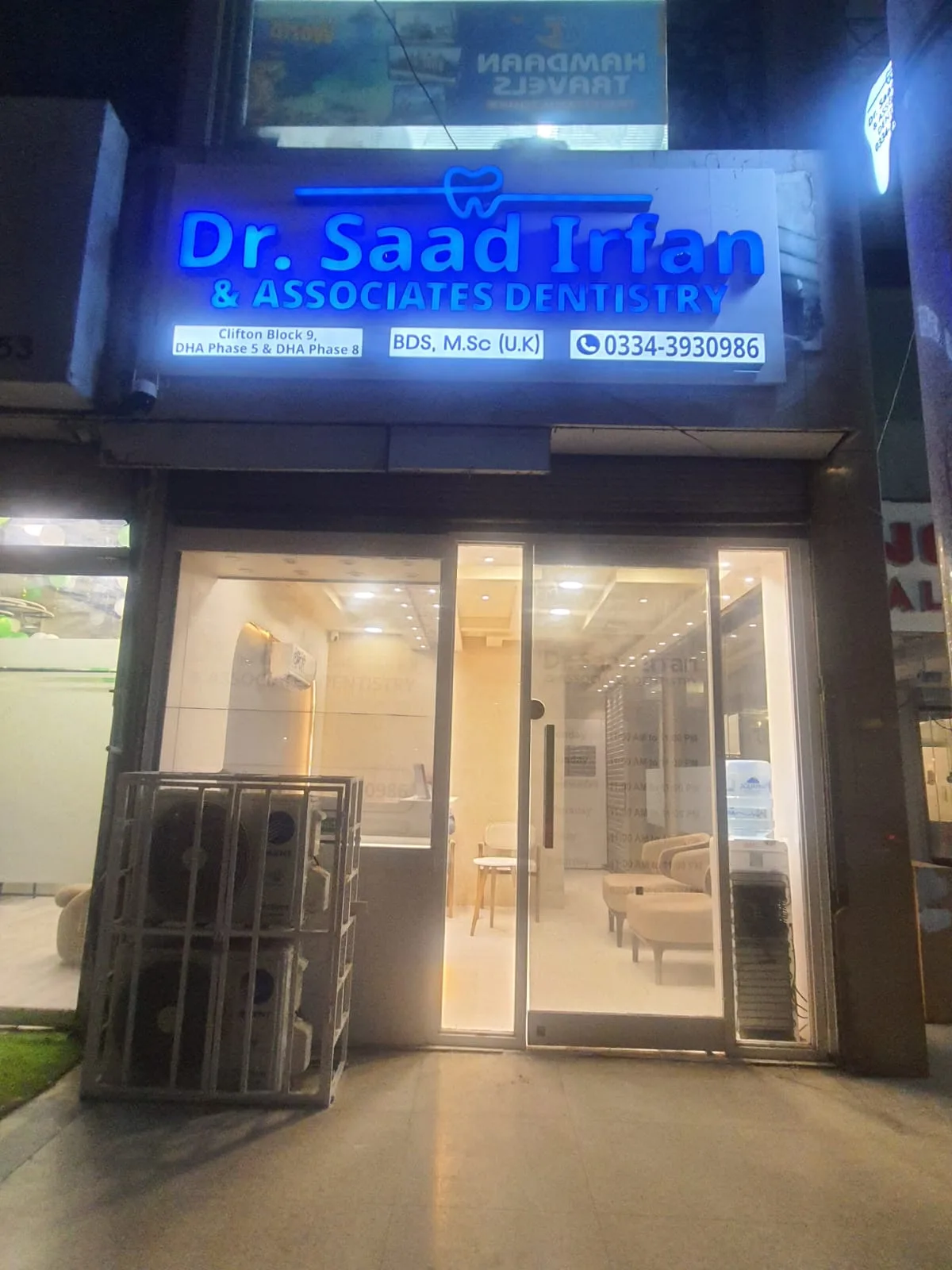
Shop No. 6, Ground Floor, Vincy Mall, Block 9, Clifton
+92 334 3930986 · Open 9AM-11PM, 7 days a week · 5.0★ (154 reviews)
Book your dental checkup in DHA Karachi
Whether this is your first visit or your 6-month recall, book on WhatsApp for the fastest confirmation. New patient appointments include the full 8-point examination and a written treatment plan before any procedure is recommended.
Open 9AM to 11PM, 7 days including public holidays. Available at DHA Phase 5 (Badar Commercial), DHA Phase 8 (Khayaban-e-Iqbal), and Clifton Block 9 (Vincy Mall).
After your checkup, related treatments may include:
Why patients book this page