
Restorative dentistry for fixed teeth and better chewing
Full Mouth Rehabilitation Karachi: Fixed Teeth, Better Chewing, and a Smile That Feels Like Yours
If you have several missing teeth, loose dentures, broken crowns, painful chewing, or a bite that no longer feels right, full mouth rehabilitation may help. At Dr. Saad Irfan & Associates Dentistry in Karachi, full mouth rehabilitation means rebuilding your mouth as one working system, not fixing one tooth at a time.
The goal is not only a better smile. The goal is to help you chew, speak, smile, and live without fear that your teeth or dentures will move at the wrong time.
Available at DHA Phase 5, DHA Phase 8, and Clifton Block 4. Open 9AM to 11PM, 7 days.
Why Patients Trust Dr. Saad Irfan for Full Mouth Rehabilitation
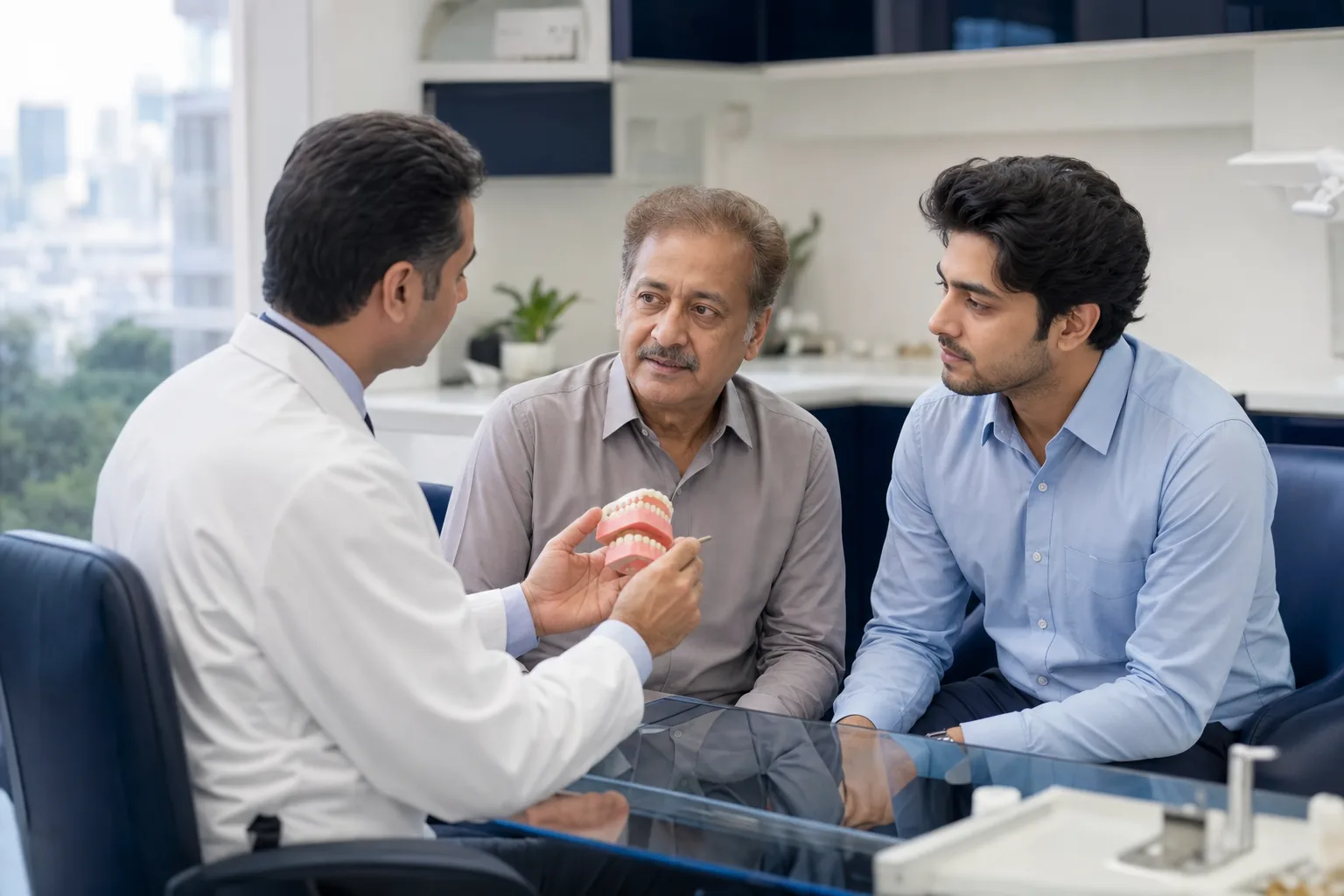
Dr. Saad Irfan, MSc Sheffield, BDS, has 15+ years of experience in restorative dentistry, dental implants, crowns, bridges, root canal treatment, and full mouth rehabilitation. He trained at the University of Sheffield, UK, and practices at Dr. Saad Irfan & Associates Dentistry in Karachi.
The clinic's published pricing policy includes a PKR 2,000 professional assessment, a written quote before treatment, and no hidden fees. You can review starting prices on the dental pricing page before booking.
Function first
The plan starts with chewing, bite balance, speech, missing teeth, gum health, and long-term stability.
One mouth system
Several problems are studied together instead of repairing one tooth at a time.
Written estimate
You receive a clear treatment direction and cost estimate before major treatment starts.
What Full Mouth Rehabilitation Actually Means
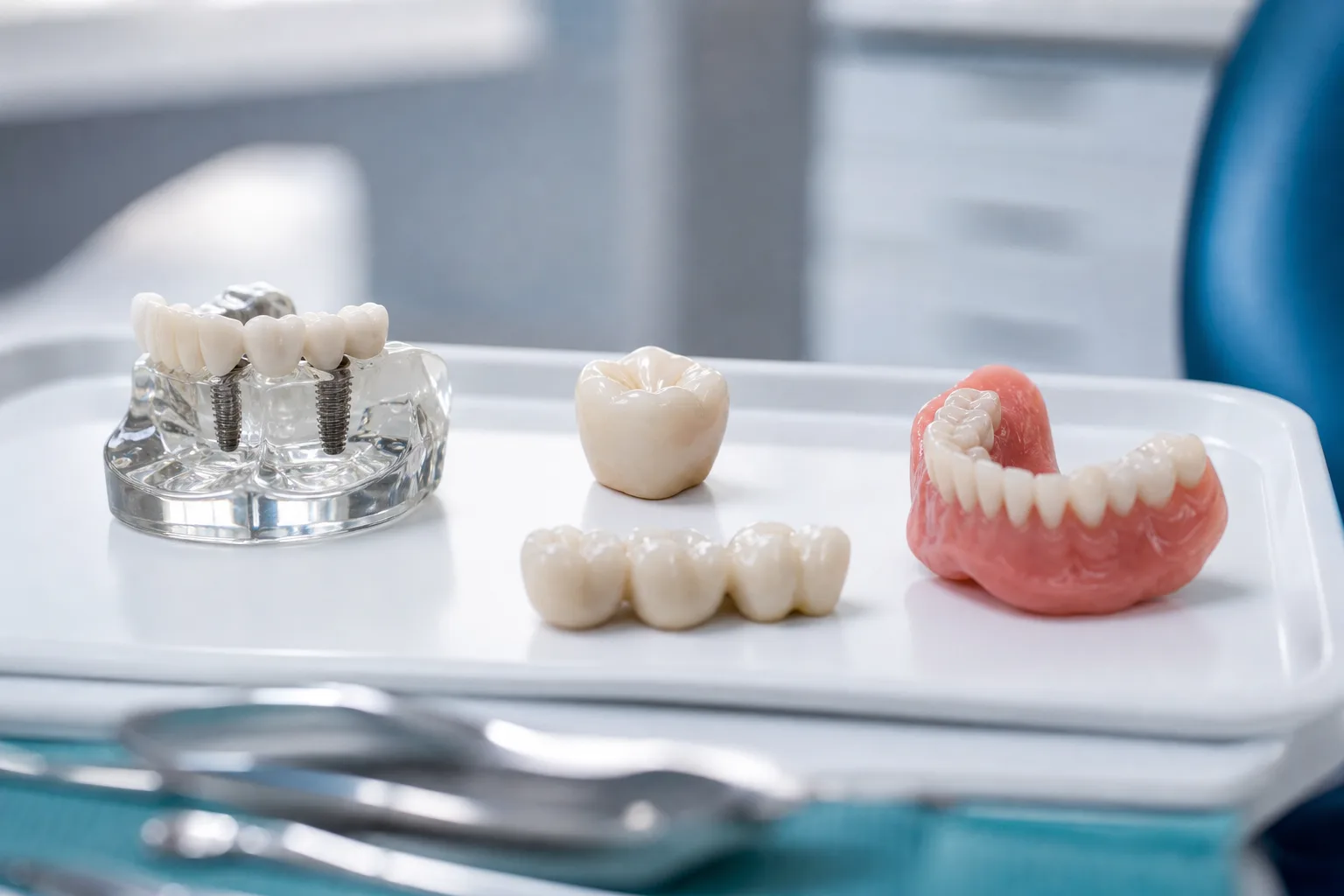
Full mouth rehabilitation, also called full mouth reconstruction, is a planned treatment that restores most or all teeth in the mouth. It can include dental implants, crowns, bridges, dentures, root canal treatment, gum care, extractions, fillings, bite correction, or a fixed zirconia bridge.
This treatment is different from a smile makeover. A smile makeover focuses mainly on appearance. Full mouth rehabilitation focuses on function first: chewing, bite balance, jaw comfort, missing teeth, worn teeth, gum health, and long-term stability.
If your main issue is one missing tooth, start with dental implants in Karachi. If some teeth may need removal before the final plan, read about tooth extraction options.
Who Usually Needs Full Mouth Rehabilitation
Many patients wait too long because they think losing teeth is normal after 50. It is common, but it should not be ignored. Missing teeth change chewing, speech, jawbone support, and confidence.
You have many missing teeth in one or both jaws.
You wear dentures that slip, click, or hurt.
You avoid meat, apples, nuts, or hard bread.
You chew from one side only.
Your front teeth are wearing down or chipping.
You have several broken, loose, or infected teeth.
You have old crowns or bridges that keep failing.
Your bite feels lower than before.
Your adult children are helping you find a stable solution.
If you are unsure where to start, book a dental checkup before committing to larger treatment.
The Main Full Mouth Rehabilitation Options
Full mouth rehabilitation is not one package. It is built around your teeth, bone, gums, health, budget, and comfort level.
Fixed implant bridge
Many missing teeth, loose dentures, or patients who want fixed teeth.
Implants are placed in the jawbone, then a fixed bridge is attached. This may be all-on-4, all-on-6, or another design depending on bone support, bite, and budget.
Implant-supported denture
Better stability at a lower cost than a full fixed bridge.
The denture still comes out for cleaning, but it clips to implants so it moves less during speech and eating. It can be a sensible middle option for denture wearers.
Crowns and bridges
Weak, cracked, worn, root-treated, or heavily filled teeth that can still be saved.
Crowns protect individual teeth. Bridges can replace missing teeth when support teeth or implants are strong enough. The bite must be checked before final work.
Root canal treatment
Infected teeth that have enough healthy structure and bone support.
Saving the right teeth matters in full mouth rehabilitation. Saving hopeless teeth can also be a mistake, so X-rays and bite pressure guide the decision.
Complete or partial dentures
Patients who cannot have surgery or want a lower-cost removable option.
Dentures can restore appearance and basic chewing, but they can move and may need relining or replacement. For some patients they are a starting point before implants.
Tooth extraction planning
Teeth with severe cracks, infection, mobility, or poor bone support.
Hopeless teeth are removed only after diagnosis. Temporary teeth can sometimes be planned so you are not left without teeth during healing.
What Happens at Each Full Mouth Rehabilitation Appointment
Full mouth assessment
45 to 75 minutes
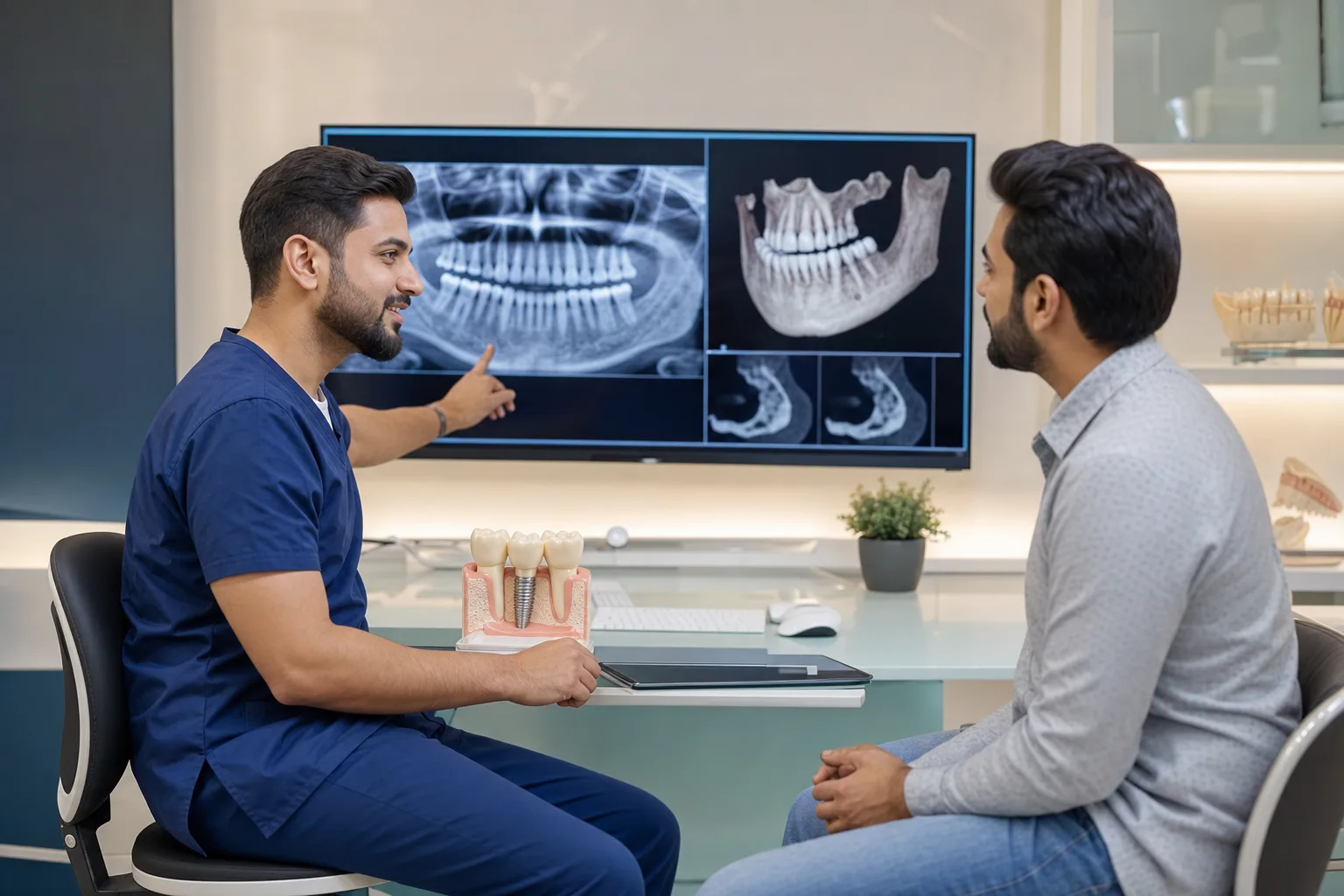
Dr. Saad checks your teeth, gums, bite, missing teeth, old crowns, dentures, jaw movement, smile line, and X-rays. You receive a clear direction and written estimate before major treatment starts.
Stabilizing pain, infection, and gums
1 to 3 visits if needed
Pain, infection, gum disease, decay, and leaking restorations are controlled first. Final crowns or bridges should not be placed over active infection.
Removing hopeless teeth
Case dependent
Some teeth cannot be saved because of deep cracks, severe gum disease, large infection, or too little structure for a crown. Extractions are planned with temporary teeth where possible.
Implant planning and placement
Usually 3 to 6 months including healing
If implants are part of the plan, bone level, implant positions, bite, and final tooth design are studied before surgery. Healing time allows bone to bond around the implant.
Temporary teeth and bite testing
During healing or before final teeth
Temporary teeth test bite height, speech, lip support, tooth length, and comfort. Adjustments here help protect the final bridge, crowns, or denture.
Final restorations and maintenance plan
Final visit sequence
Final crowns, bridges, implant-supported dentures, complete dentures, or zirconia prosthesis are fitted. Cleaning access, bite, speech, and night guard needs are checked.
Does Full Mouth Rehabilitation Hurt?
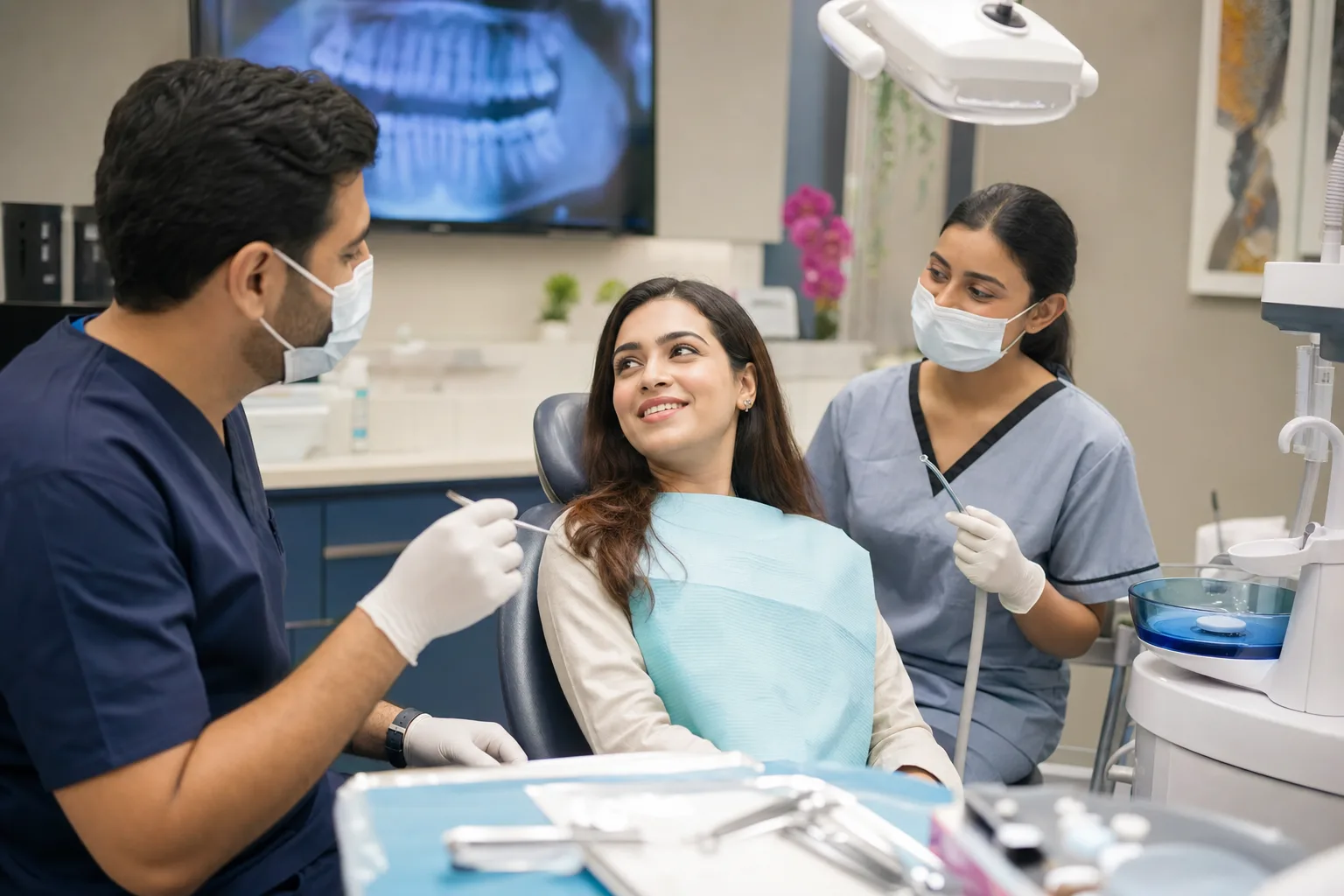
Most treatment is done with local anesthesia, so you should not feel sharp pain during procedures. You may feel pressure, water spray, vibration, or stretching of the mouth.
After implant surgery or extractions, soreness and swelling can happen for a few days. Root canal treatment, crown preparation, and fillings are usually comfortable when the tooth is numb.
Fear is common in full mouth cases. The first visit should be used to explain your fear, not hide it, so the appointment can be paced safely.
Full Mouth Rehabilitation Cost in Karachi
There is no single honest fixed price for full mouth rehabilitation because the plan can include many different treatments. A patient needing 4 crowns and 1 implant will not pay the same as a patient needing full upper and lower implant bridges.
| Professional assessment | PKR 2,000 |
| Dental checkup | PKR 2,000 |
| Tooth extraction | From PKR 8,000 |
| Root canal treatment | From PKR 35,000 |
| Dental crowns | From PKR 45,000 |
| Dental implants | From PKR 150,000 per implant |
| Teeth whitening | From PKR 35,000 |
| Veneers | From PKR 40,000 per tooth |
| Braces and aligners | From PKR 200,000 |
| Full mouth implant restoration | Educational range PKR 800,000 to PKR 1,500,000 |
The final amount depends on implant number, bridge material, bone condition, temporary teeth, final prosthesis, and whether one arch or both arches are treated. Ask for a written estimate through the pricing page or book through the contact page.
Who Is a Good Candidate?
Good candidates usually have several damaged or missing teeth and want a stable long-term plan. Many are adults with loose dentures, worn teeth, broken crowns, or chewing problems.
Age alone does not stop treatment. Many patients in their 60s and 70s can receive implants if their health, bone, and gums are suitable.
Who Should Wait?
Full mouth rehabilitation should be delayed if you have active gum disease, untreated infection, uncontrolled diabetes, heavy smoking, poor oral hygiene, or a medical condition that makes surgery unsafe.
A fixed zirconia implant bridge may not be the best first option if you cannot clean under it, cannot attend follow-up visits, or want the cheapest possible solution.
What Can Go Wrong and How We Reduce the Risk
Full mouth rehabilitation is safe when planned well, but it is a major dental treatment. The cheapest full mouth plan is not always the safest. Planning and follow-up matter as much as the final teeth.
Possible risks
Implant failure
Gum inflammation around implants
Food trapping under bridges
Broken temporary teeth
Crown or bridge chipping
Bite discomfort
Speech changes while adjusting
Denture sore spots
Need for extra visits or repairs
Risk is reduced by
Full diagnosis before treatment
X-rays and digital planning
Treating gum disease before final teeth
Removing hopeless teeth instead of over-saving them
Testing bite with temporary teeth
Choosing materials based on bite strength
Clear cleaning instructions and maintenance visits
Night guard when grinding is present
Full Mouth Rehabilitation vs Dentures, Implants, and Smile Makeover
Full mouth rehabilitation is the full plan. Dentures, implants, crowns, bridges, and veneers are tools inside that plan. Dentures are removable and lower cost. Dental implants are fixed or stable tooth replacements. Crowns protect weak teeth. Bridges replace missing teeth.
A smile makeover focuses more on appearance. Full mouth rehabilitation focuses on function first, then appearance. If you are comparing options, read the clinic's blog, review case studies, or compare all treatments on the dental services hub.

Visit Dr. Saad Irfan & Associates Dentistry in Karachi
DHA Phase 5 - Badar Commercial
House 4-C, Shop 2, Reina, Street No. 2, DHA Phase 5 Badar Commercial Area Defence V Defence Housing Authority, Karachi, 75500
Open 9AM to 11PM, 7 days
DHA Phase 8 - Khayaban-e-Iqbal
H#202/2, 21 Street, Khayaban-e-Iqbal, Phase 8, DHA, Karachi, 75533
Open 9AM to 11PM, 7 days
Clifton Block 4 - Falcon Terrace
Falcon Terrace 1, Block 4 Clifton, Karachi, 75600, Pakistan
Open 9AM to 11PM, 7 days
Frequently Asked Questions
How much does full mouth rehabilitation cost in Karachi?
Full mouth rehabilitation cost in Karachi depends on the number of teeth, implants, crowns, bridges, extractions, and gum treatments needed. Published prices include professional assessment at PKR 2,000, crowns from PKR 45,000, root canal from PKR 35,000, extraction from PKR 8,000, and dental implants from PKR 150,000 per implant. Full mouth implant restoration may range from PKR 800,000 to PKR 1,500,000 depending on the case.
What is included in full mouth rehabilitation?
Full mouth rehabilitation can include dental implants, crowns, bridges, dentures, root canal treatment, tooth extraction, fillings, gum treatment, bite correction, temporary teeth, and final zirconia or ceramic restorations. Your plan depends on which teeth can be saved and which teeth need replacement.
Is full mouth rehabilitation painful?
Treatment is planned to be comfortable with local anesthesia when needed. You may feel pressure during procedures, but you should not feel sharp pain. After extractions or implant surgery, soreness and swelling can happen for a few days.
How long does full mouth rehabilitation take?
Simple crown and bridge cases may take 2 to 6 weeks. Implant-based full mouth rehabilitation often takes 3 to 6 months because implants need healing time. A documented clinic case with 6 implants took 5 months and 6 visits.
Can I get fixed teeth if I have loose dentures?
Yes, many patients with loose dentures can be assessed for implant-supported teeth. Options may include all-on-4, all-on-6, an implant-supported denture, or a fixed zirconia bridge. Suitability depends on bone level, gum health, medical history, and budget.
Are implants always better than dentures?
Implants are usually more stable and stronger for chewing, but they are not suitable for every patient. Dentures may be better for patients who cannot have surgery, have limited bone, or need a lower-cost option. Some patients choose implant-supported dentures as a middle option.
Can damaged teeth be saved instead of removed?
Some damaged teeth can be saved with root canal treatment, crowns, or gum treatment. Teeth with severe cracks, advanced gum disease, deep infection, or poor bone support may need extraction. The decision should be made after examination and X-rays.
How do I book a full mouth rehabilitation consultation?
Call or WhatsApp 0333-3346606. You can also use the contact page and choose DHA Phase 5, DHA Phase 8, or Clifton Block 4.
Ready to Rebuild Your Bite and Smile?
The easiest next step is a professional full mouth assessment. Bring your concerns, old X-rays if you have them, and any denture, crown, or bridge you currently use. You will receive a written treatment plan and cost estimate before you decide.