
Fixed implant teeth for loose dentures
All-on-4 Dental Implants Karachi: Fixed Teeth for Loose Dentures and Missing Teeth
If your denture slips while talking, hurts while eating, or makes you avoid family meals, All-on-4 dental implants may help. This treatment uses dental implants to support a fixed full-arch bridge, so your teeth feel more stable than a regular removable denture.
At Dr. Saad Irfan & Associates Dentistry in Karachi, All-on-4 planning starts with a full mouth assessment, X-rays, bone review, bite check, and a written estimate. The goal is fixed teeth that are comfortable, cleanable, and planned for your mouth.
Available at DHA Phase 5, DHA Phase 8, and Clifton Block 4. Open 9AM to 11PM, 7 days.

Why Patients Trust Dr. Saad Irfan for All-on-4 Dental Implants
Dr. Saad Irfan, MSc Sheffield, BDS, has 15+ years of experience in restorative dentistry, dental implants, crowns, root canal treatment, smile design, and full mouth rehabilitation. His implant work is based on diagnosis first, because fixed teeth should not be planned only from photos.
The clinic's published policy includes a PKR 2,000 professional assessment, written quote before treatment, and no hidden fees. You can review starting prices on the pricing page or compare the wider dental implants in Karachi guide.
Fixed, not loose
The plan focuses on stability for speech, meals, and daily confidence.
Bone and bite first
X-rays, bite force, jaw support, and cleaning access guide the implant design.
Clear estimate
You receive options, timeline, and cost before deciding on surgery.
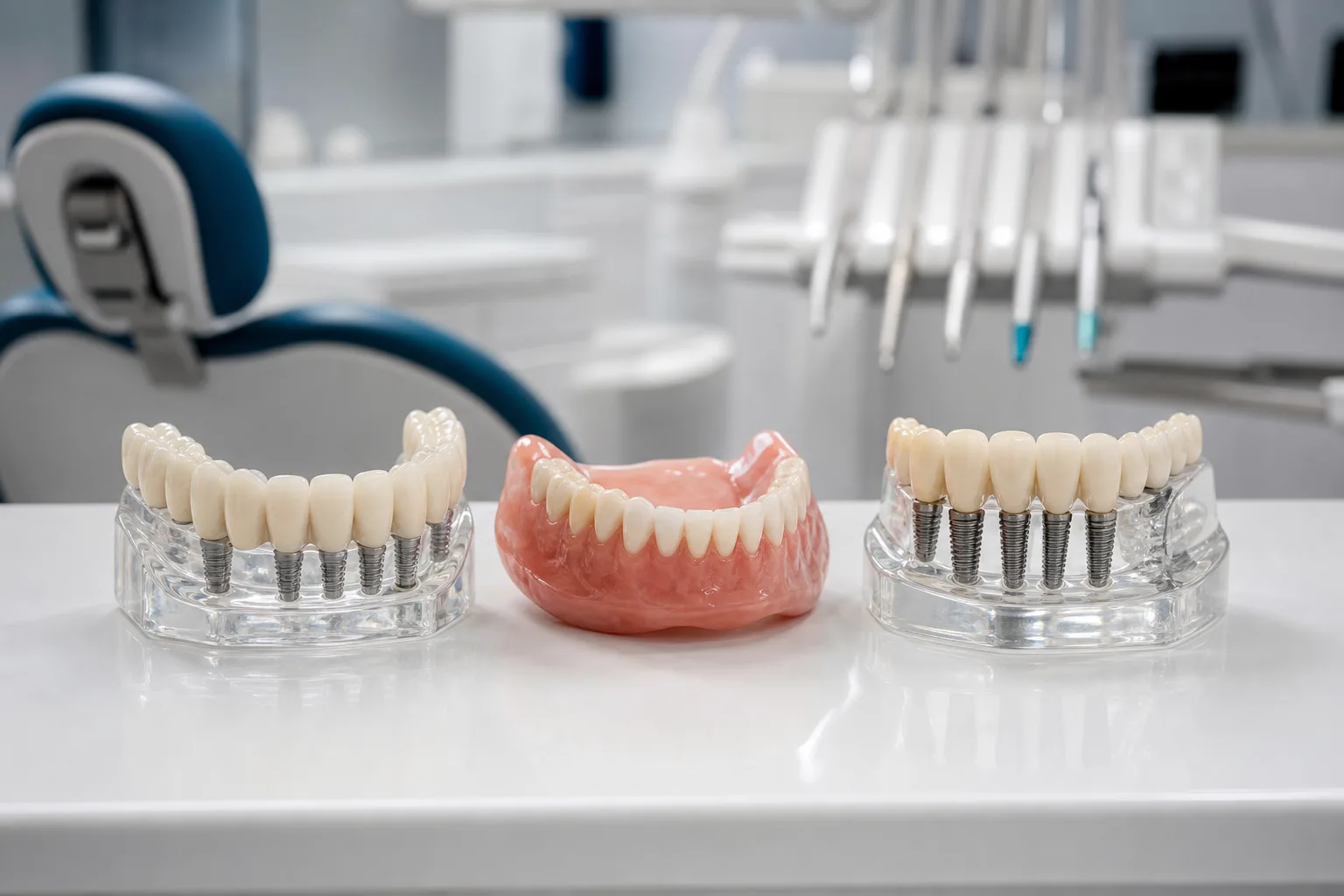
What Are All-on-4 Dental Implants?
All-on-4 dental implants are a full-arch tooth replacement method. A full arch means all upper teeth or all lower teeth. Instead of placing one implant for every missing tooth, the dentist places 4 implants in one jaw and attaches a fixed bridge to them.
The bridge does not come out like a regular denture. It is fixed to implants, and only the dentist removes it when needed. In many plans, the back implants are angled to use available bone and reduce grafting in selected patients.
If your situation involves bite collapse, worn teeth, and several treatment types together, read about full mouth rehabilitation.
Who Usually Needs All-on-4 Dental Implants?
All-on-4 is usually considered for patients who have lost most or all teeth in one jaw. Many patients do not ask for "All-on-4" by name. They say, "Doctor, I want fixed teeth." That is the real search intent.
Your full denture slips while eating or speaking.
Your lower denture feels loose most of the time.
You have many missing teeth in one jaw.
Your remaining teeth are weak, infected, or loose.
You avoid meat, apples, nuts, naan, or family meals.
You use denture glue often.
You feel nervous speaking in public.
You want fixed teeth instead of a removable plate.
Your adult children are helping you find a safer long-term option.
If your problem is one or two missing teeth, you may need a regular dental implant plan instead.
All-on-4 vs Regular Dentures
Regular dentures sit on your gums and rely on suction, shape, and muscle control. All-on-4 teeth are different because they are attached to implants in the jawbone. If you are comparing options, read the clinic guide on dental implants vs dentures.
| Factor | Regular denture | All-on-4 fixed bridge |
|---|---|---|
| Stability | Can move or slip | Fixed to implants |
| Cleaning | Removed daily | Cleaned in the mouth with special tools |
| Chewing | Lower chewing force | Better stability for chewing |
| Comfort | Can cause sore spots | Usually more stable after healing |
| Surgery | No surgery | Implant surgery needed |
| Cost | Lower upfront cost | Higher upfront cost |
| Bone support | Does not stop bone loss well | Implants stimulate bone around implant areas |
All-on-4 vs All-on-6
All-on-4 uses 4 implants in one jaw. All-on-6 uses 6 implants in one jaw. All-on-4 can work well in selected patients with enough bone and a suitable bite.
All-on-6 may be better when more support is needed, such as stronger bite force, heavier chewing, better bone spread, or a larger arch. The better option is not always the bigger number.
Same-Day Fixed Teeth
Some patients can receive fixed temporary teeth on the same day as implant placement. This is often called same-day teeth or teeth in a day.
This does not mean final teeth are finished in one day. Same-day teeth are usually temporary. Final teeth are made later after osseointegration, when implants have bonded with bone.
What Happens at Each All-on-4 Appointment?
Implant assessment
45 to 75 minutes
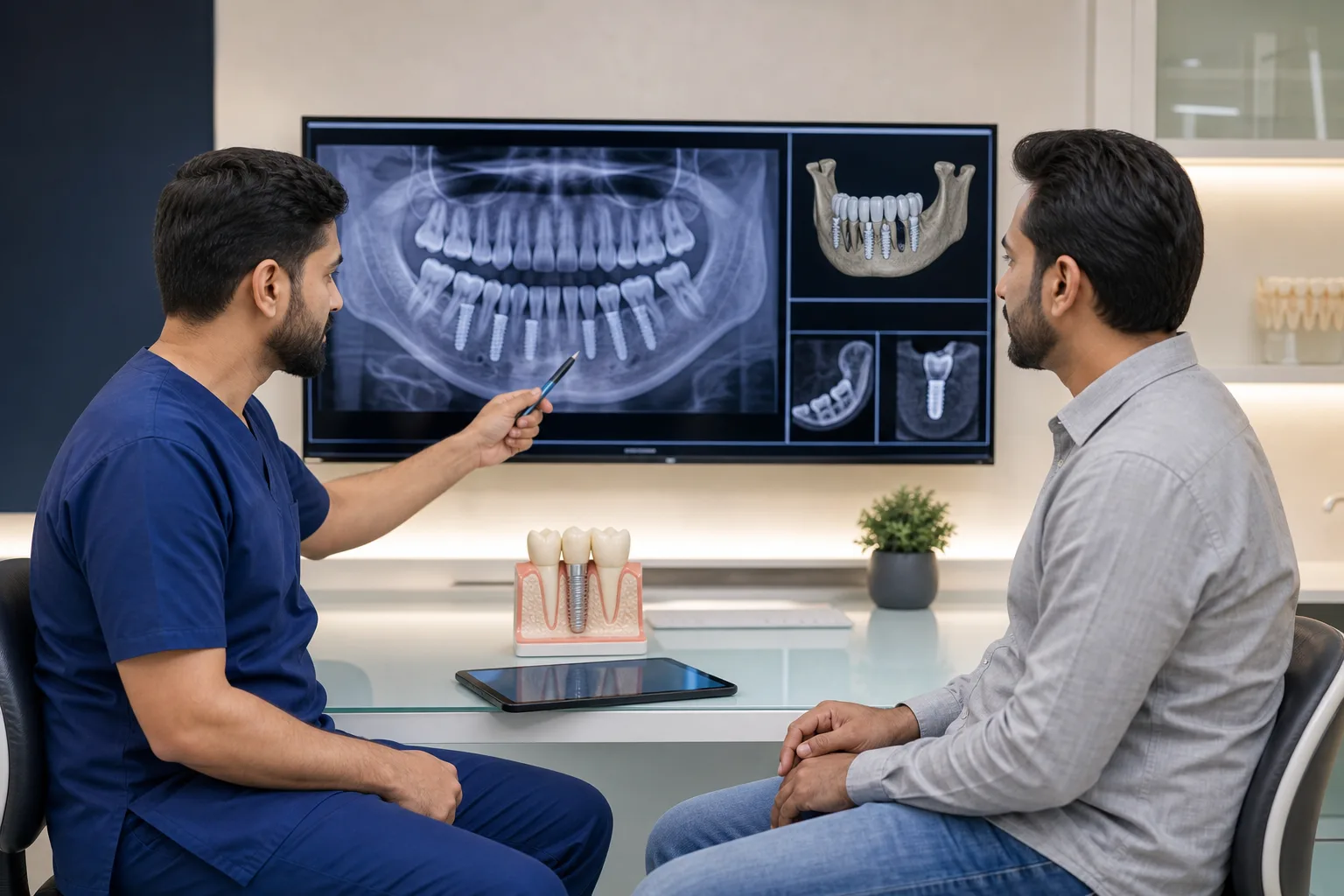
Dr. Saad checks your mouth, gums, bite, dentures, remaining teeth, jawbone level, and medical history. X-rays and scans help decide whether All-on-4, All-on-6, or another option is safer.
Treatment planning and records
1 planning visit
Bite, smile line, face support, tooth shade, and tooth shape are recorded. This step matters for patients who have worn dentures for years because lip support and bite height may need careful rebuilding.
Extractions and implant placement
Surgery visit
Weak or hopeless teeth are removed if needed, then implants are placed in planned positions. In selected cases, fixed temporary teeth can be attached on the same day.
Healing and bite checks
Around 3 to 4 months
The gums and bone heal while implants bond with bone. The team checks soreness, swelling, bite comfort, speech, and cleaning. Temporary teeth are not final teeth.
Final bridge planning
2 to 3 visits
After healing, new records are taken for the final bridge. Zirconia or another suitable fixed prosthesis is planned around implant stability, gum shape, bite, and tooth display.
Final fitting and maintenance
Final visit sequence
The bridge is fitted, bite is checked, and you are shown how to clean under the bridge. Fixed implant teeth still need maintenance visits and daily hygiene.
Does All-on-4 Implant Treatment Hurt?
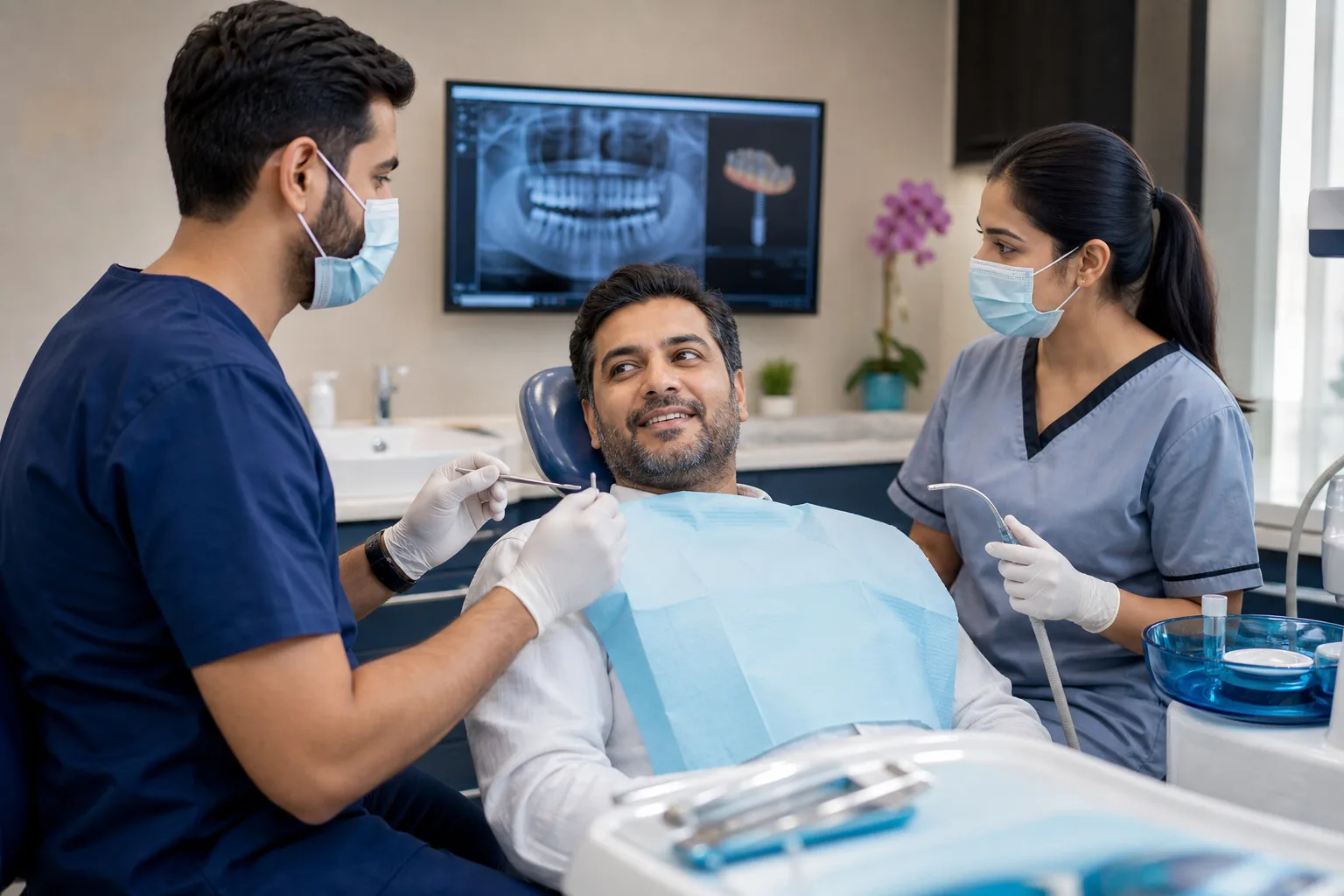
During surgery, local anesthesia is used. You should not feel sharp pain. You may feel pressure and movement. After surgery, soreness, swelling, bruising, and tightness can happen for a few days.
Most patients are more nervous before surgery than during it. If you have dental fear, tell the team before treatment so your appointment can be paced properly.
All-on-4 Dental Implants Cost in Karachi
All-on-4 cost in Karachi depends on whether one jaw or both jaws are treated, number of implants, bone condition, temporary teeth, final bridge material, lab work, and whether extractions or grafting are needed.
| Professional assessment | PKR 2,000 |
| Dental implant | From PKR 150,000 per implant |
| Tooth extraction | From PKR 8,000 |
| Dental crowns | From PKR 45,000 |
| Root canal treatment | From PKR 35,000 |
| Full mouth implant restoration | Often PKR 800,000 to PKR 1,500,000 depending on the case |
The only accurate way to know your cost is to examine your mouth and bone. For more details, read Dental Implant Cost in Karachi or visit the pricing page.
What Affects the Final Price?
One arch or both arches
Number of implants
Bone level and need for grafting
Temporary fixed teeth
Final bridge material such as acrylic, ceramic, or zirconia
Extractions and infection control
Dentist experience and prosthetic planning
Who Should Wait?
All-on-4 should be delayed or avoided if your mouth is not ready. This includes active gum disease, untreated infection, poor oral hygiene, heavy smoking, uncontrolled diabetes, weak bone, unsafe medical conditions, or unrealistic expectations about one-day final teeth.
This does not always mean implants are impossible. It may mean treatment must be staged, or another option is safer.
What Can Go Wrong with All-on-4 Implants?
All-on-4 is a proven concept, but it is still surgery and long-term dental work. Risks must be explained clearly. Fixed teeth are not fit and forget; they need cleaning, bite control, and maintenance.
Possible problems
Implant failure
Infection
Gum inflammation around implants
Peri-implantitis
Temporary bridge fracture
Final bridge chipping
Food trapping under the bridge
Speech adjustment problems
Bite discomfort
Need for extra visits
Risk is reduced by
Full diagnosis before surgery
Digital X-rays and scan planning
Careful implant positioning
Treating gum disease first
Checking bite forces
Using a suitable temporary bridge
Choosing the right final material
Teaching cleaning under the bridge
Maintenance visits and night guard planning when needed
Eating, Cleaning, and Long-Term Maintenance
After final teeth are fitted and your bite is stable, you can usually eat a wider range of foods than with loose dentures. During healing, you must follow a soft-food diet and avoid hard biting on temporary teeth.
Cleaning under the bridge is not optional. Fixed implant teeth can still develop gum inflammation around implants if plaque builds up. You will be shown how to clean under the bridge and when to return for maintenance.

Visit Dr. Saad Irfan & Associates Dentistry in Karachi
DHA Phase 5 - Badar Commercial
House 4-C, Shop 2, Reina, Street No. 2, DHA Phase 5 Badar Commercial Area Defence V Defence Housing Authority, Karachi, 75500
Open 9AM to 11PM, 7 days
DHA Phase 8 - Khayaban-e-Iqbal
H#202/2, 21 Street, Khayaban-e-Iqbal, Phase 8, DHA, Karachi, 75533
Open 9AM to 11PM, 7 days
Clifton Block 4 - Falcon Terrace
Falcon Terrace 1, Block 4 Clifton, Karachi, 75600, Pakistan
Open 9AM to 11PM, 7 days
Frequently Asked Questions
How much do All-on-4 dental implants cost in Karachi?
All-on-4 dental implant cost in Karachi depends on one jaw or both jaws, number of implants, bone condition, extractions, temporary teeth, and final bridge material. At Dr. Saad Irfan & Associates Dentistry, dental implants start from PKR 150,000 per implant, and full mouth implant restoration often ranges from PKR 800,000 to PKR 1,500,000 depending on the case. A written quote is given after assessment.
Are All-on-4 teeth fixed or removable?
All-on-4 teeth are fixed to implants. They do not come out like regular dentures. The patient cleans them in the mouth, and the dentist removes them only when needed for maintenance or repair.
Can I get teeth on the same day?
Some patients can receive fixed temporary teeth on the same day as implant placement. This depends on bone support, implant stability, infection control, and bite forces. Final teeth are usually made later after healing.
Is All-on-4 painful?
The procedure is done with local anesthesia, so you should not feel sharp pain during surgery. Soreness, swelling, or bruising can happen for a few days after implant placement. The clinic gives aftercare instructions to manage healing.
How long does All-on-4 treatment take?
Surgery and temporary teeth may happen in one visit for selected patients. The full treatment often takes 3 to 6 months because implants need time to bond with bone before final teeth are fitted. Dr. Saad's documented full mouth case took 5 months and 6 visits.
Is All-on-4 better than dentures?
All-on-4 is usually more stable than regular dentures because the bridge is fixed to implants. It can improve chewing and confidence. Dentures may still be better for patients who cannot have surgery, have limited bone, or need a lower-cost option.
What is the difference between All-on-4 and All-on-6?
All-on-4 uses 4 implants in one jaw. All-on-6 uses 6 implants in one jaw. All-on-6 may give more support in selected cases, but it is not always needed. The right option depends on bone, bite, final bridge design, and diagnosis.
Can All-on-4 fail?
Yes, implant failure can happen. Causes may include infection, poor healing, smoking, uncontrolled diabetes, heavy grinding, poor cleaning, or weak bone. Risk is reduced with careful planning, good hygiene, maintenance visits, and proper bite control.
Can I eat normally with All-on-4 teeth?
After final teeth are fitted and your bite is stable, you can usually eat a wider range of foods than with loose dentures. During healing, you must follow a soft-food diet and avoid hard biting on temporary teeth.
How do I book an All-on-4 consultation?
Call or WhatsApp 0333-3346606. You can also use the contact page and choose DHA Phase 5, DHA Phase 8, or Clifton Block 4.
Ready to Stop Worrying About Loose Dentures?
The easiest next step is an implant assessment. Bring your current denture, old X-rays if you have them, and a list of medicines or medical conditions. You will receive a written plan with options, timeline, and cost before you decide.